🤝 What do collaboration and salsa have in common?: Tips for building long-lasting partnerships

Good journalism has always been about relationships. As an immigrant from Uruguay, a mom and a journalist who built her career in Arizona, I’ve spent a lot of time thinking about what it means to serve a community and grow alongside it.
Early in my career, I often asked myself: What does success look like? Do I need to leave my community to advance? Do I need to go work for a national outlet or move elsewhere to find opportunities? My answer was no. I wanted to stay and continue doing the work locally.
That question also drove the foundation of Altavoz Lab: What would it look like if journalists could stay in their communities and thrive? What if advancement wasn’t measured by your ability to move to a different market or work at The New York Times, but by your ability to build a sustainable career where you are — earning a living wage, having benefits, finding balance and continuing to serve the people who trust you?
At Altavoz, we bring that vision to life through fellowships, mentorship and direct investments in journalists and newsrooms. But one of my favorite parts of our work — and one area where I’ve seen tremendous success — is convening collaborations and fostering partnerships.
Many community journalists face the same reality: We have a little bit of funding here, a little bit of funding there, but it’s never enough. And it’s not just about the money. It’s about capacity. It’s about one person wearing many hats. Collaboration allows us to multiply the resources we have and convene partners who share our values so we can go further together.
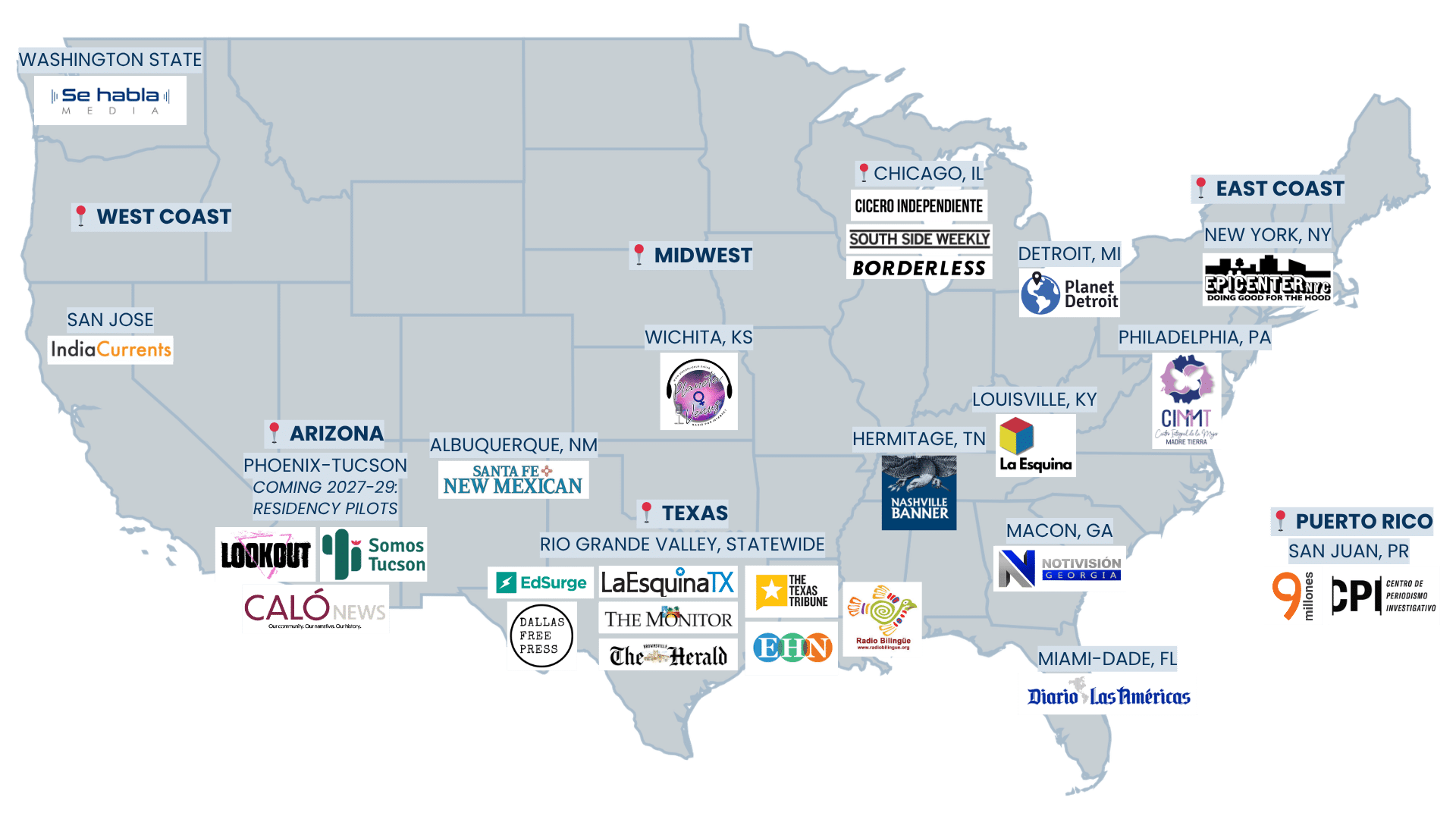
Over the years, Altavoz has supported local journalists and newsrooms across the country while creating partnerships that amplify their work. But one thing I’ve learned is that collaborations don’t begin with a big project.
They begin with trust.
Partnerships, much like audience trust, have to be earned. They take time.
My first piece of advice is simple: Start small. Don’t begin with a massive collaboration. Plan a story together. Organize a community event. Create a resource guide.
One example is a project currently underway in Tucson, Arizona, where multiple newsrooms are working alongside an Altavoz fellow to create a guide for immigrant families who have loved ones in detention. Navigating the detention system has become increasingly complicated. Families need information about how to locate someone, what documentation is required to visit them, and what to expect. No single newsroom has all the answers, but together they can create a far more useful resource for the community.
Second: Know yourself. Understand the strengths you bring to the table and be honest about them. Maybe your newsroom has strong fact-checking systems. Maybe another partner has a great editor. Maybe someone else has stronger audience engagement or distribution. The best collaborations happen when everyone understands their role and contributes what they do best.
Third: Don’t forget the planning. Journalists are often eager to get started, but clear agreements matter. Create a timeline. Build a calendar backward from publication. Decide who is responsible for what. Whether it’s a formal MOU or a shared document, everyone should know the expectations from the beginning. One of the best collaborations I participated in had detailed agreements for editing, fact-checking, translation and deadlines. It helped everyone stay aligned and avoided the problem of having too many cooks in the kitchen.
Finally: Test, learn and fail. Not every partnership will work perfectly. That’s okay. Every collaboration teaches you something — about your partners, about yourself and about new ways of working.
I often compare collaborations to salsa dancing. Sometimes you lead. Sometimes you follow. Sometimes you accidentally step on your partner’s foot. You apologize, keep moving and continue dancing. The beauty of collaboration isn’t just what you create together. It’s also what you learn from one another along the way.
—Valeria Fernández, Executive director and founder of Altavoz Lab
A version of this was published on our monthly newsletter, if you would like to receive our news subscribe to En Voz Alta on the sidebar.
Author