Rooted in Empathy. Connected Through Visual Journalism.
“We have a tremendous responsibility as visual storytellers to build trust and approach our work in a spirit of collaboration with the communities that allow us to share their stories. As the mentor for the first Nick Oza Visual Fellowship, I look forward to being a trusted collaborator for the fellow as we work together to craft a thoughtful and meaningful project for their community.”
— Roberto “Bear” Guerra, Nick Oza Visual Fellowship Mentor
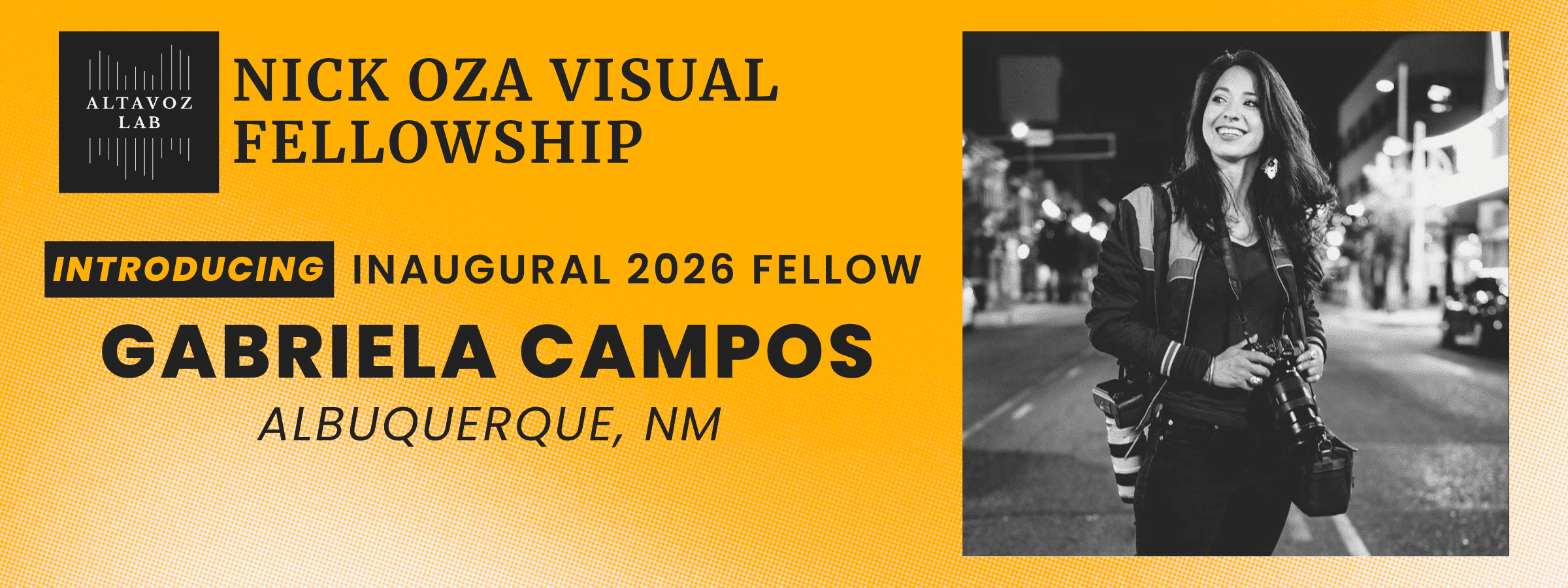
The Nick Oza Visual Fellowship is a promise: to empower photojournalists who reflect, uplift, and strengthen the communities they call home. Gabriela Campos, Altavoz Lab’s inaugural Nick Oza Visual Fellow, is that promise, kept.
Gabriela Campos was born and raised in Santa Fe. She picked up her father’s old Pentax camera in high school and never put it down. Today, as a staff photojournalist for The Santa Fe New Mexican, her work has appeared in The New York Times, The Guardian, and the Smithsonian Museum of American History’s permanent collection. But more importantly, Gabriela is a native daughter of the Southwest. For eight years, she has photographed her neighbors, her traditions and her hometown.
Gabriela was selected by a panel of renowned visual editors and photojournalists: Roberto “Bear” Guerra, Visuals Editor at High Country News, Virginia Lozano, Senior Photo Editor at NPR, and Zaydee Sanchez, independent photojournalist and 2026 Photojournalism Fellow at ProPublica, from a highly competitive pool of applicants across the Southwest. Her work stood out for her mission to serve her community, its deep connection to the area and her long-standing commitment to documenting the people, traditions and cultural identity of New Mexico.
Throughout the 12-month fellowship, Gabriela will document the unsung women of New Mexico’s lowrider culture. Lowrider culture is more than just customized, hydraulic-equipped classic cars; it is a powerful expression of cultural pride, a living art form deeply connected to faith, and a family-centered tradition that has successfully redefined its identity from rebellious outcast to cherished state treasure. Lowriding is woven into the fabric of New Mexican identity, but the story has long been told from a masculine perspective. Gabriela’s fellowship project changes that.
Her work captures behind-the-scenes preparation, mechanical work and the aging female pioneers who redefined their place in the culture. It is timely, urgent and deeply accountable. When she photographs along Central Ave. in Albuquerque, she greets the women by name.
Beyond a $15,000 stipend, Gabriela will work with the Altavoz Lab team to build a community engagement plan to ensure that the women she photographs not only see themselves in the work but help shape how their stories are told. This is photojournalism rooted in trust, not extraction.
Lillyana Martinez leans on George and Amor Bustamante’s 1959 El Camino in the Barelas neighborhood of Albuquerque, April 2023. Photo by Gabriela Campos/High Country News
“Being a photojournalist in my own community is such a gift. It allows me to tell the stories of the people and the places I grew up amongst. Sometimes New Mexican communities here can be overlooked by national news, and that’s why it’s important for people from here to tell our own stories and highlight the issues that are most important to us. Nobody cares more about a community than people from here; we tell the stories of our own home. I’m so grateful for that.”
— Gabriela Campos, Nick Oza Inaugural Visual Fellow
Preserving the Legacy of Nick Oza
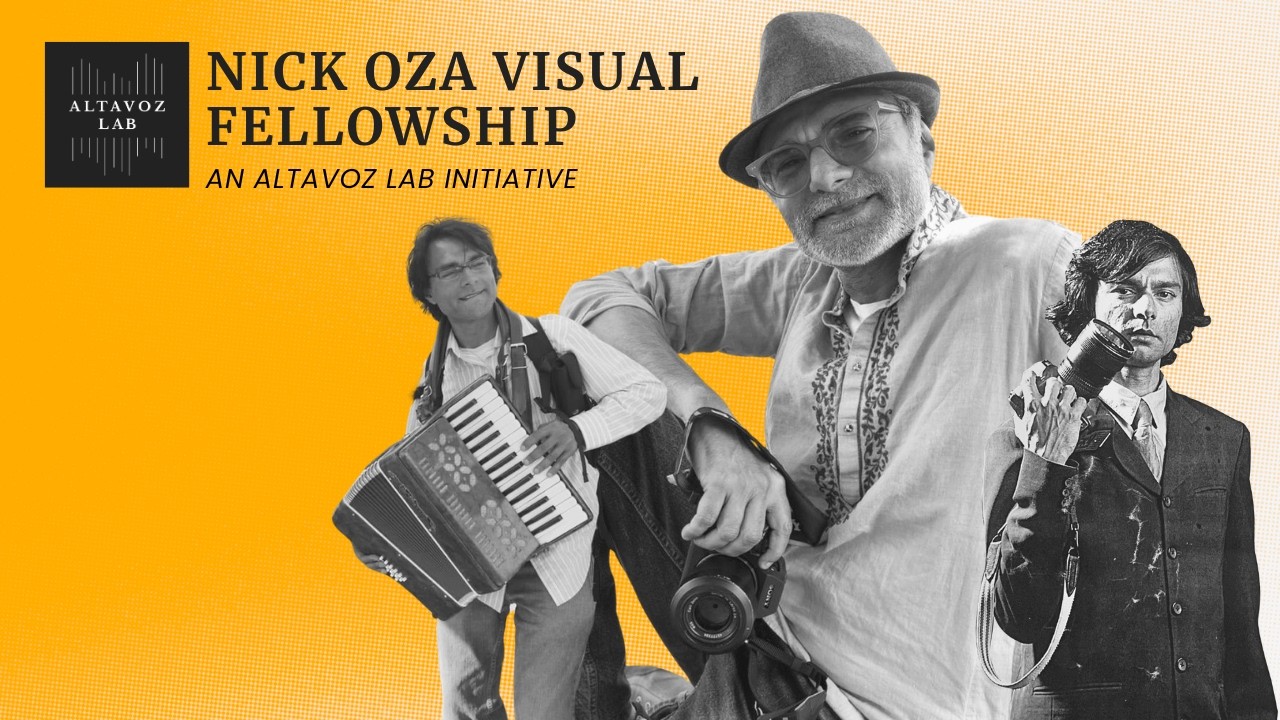
Nick Oza was an immigrant and Pulitzer Prize-winning photojournalist whose compassion, humility and artistry continue to inspire visual storytellers across the country. He didn’t just cover stories; he lived among them, building trust through consistency and care. After his tragic passing in 2021, this fellowship — proudly crowdfunded by colleagues, friends and family — was built to carry forward his mission of cultivating storytellers who approach their work with the same care, integrity and curiosity.
This is Nick Oza’s legacy: recording cultural transformation as it unfolds, with the trust only a local journalist can earn.
Special thanks to The Arizona Republic for supporting the Nick Oza Visual Fellowship fundraising campaign and helping us honor his legacy through his photography.
Gabriela’s Work
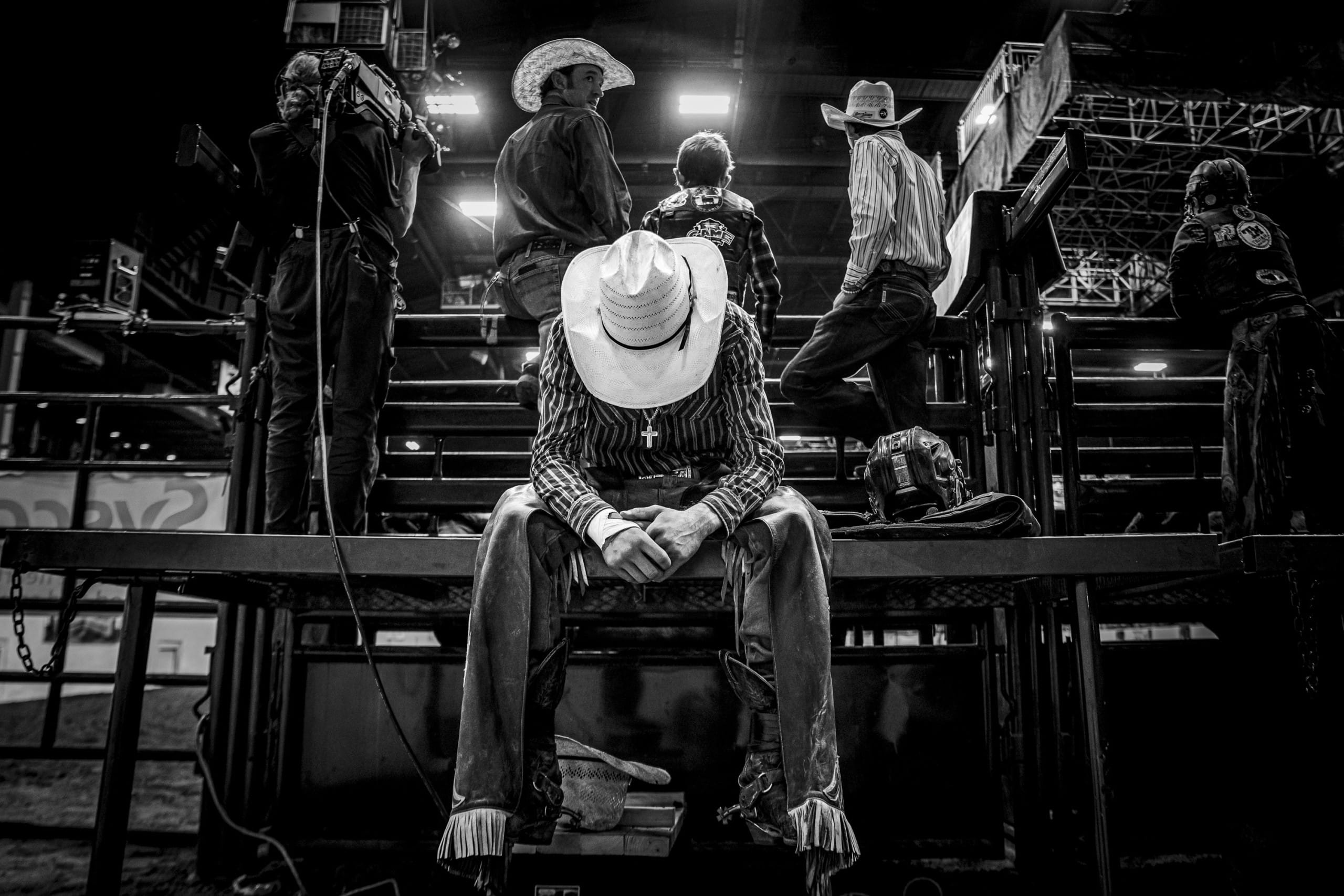
Albuquerque rodeo, September 2022. Photo by Gabriela Campos
Pilgrim on his way to Santuario de Chimayó during Holy Week, March 2024. Photo by Gabriela Campos
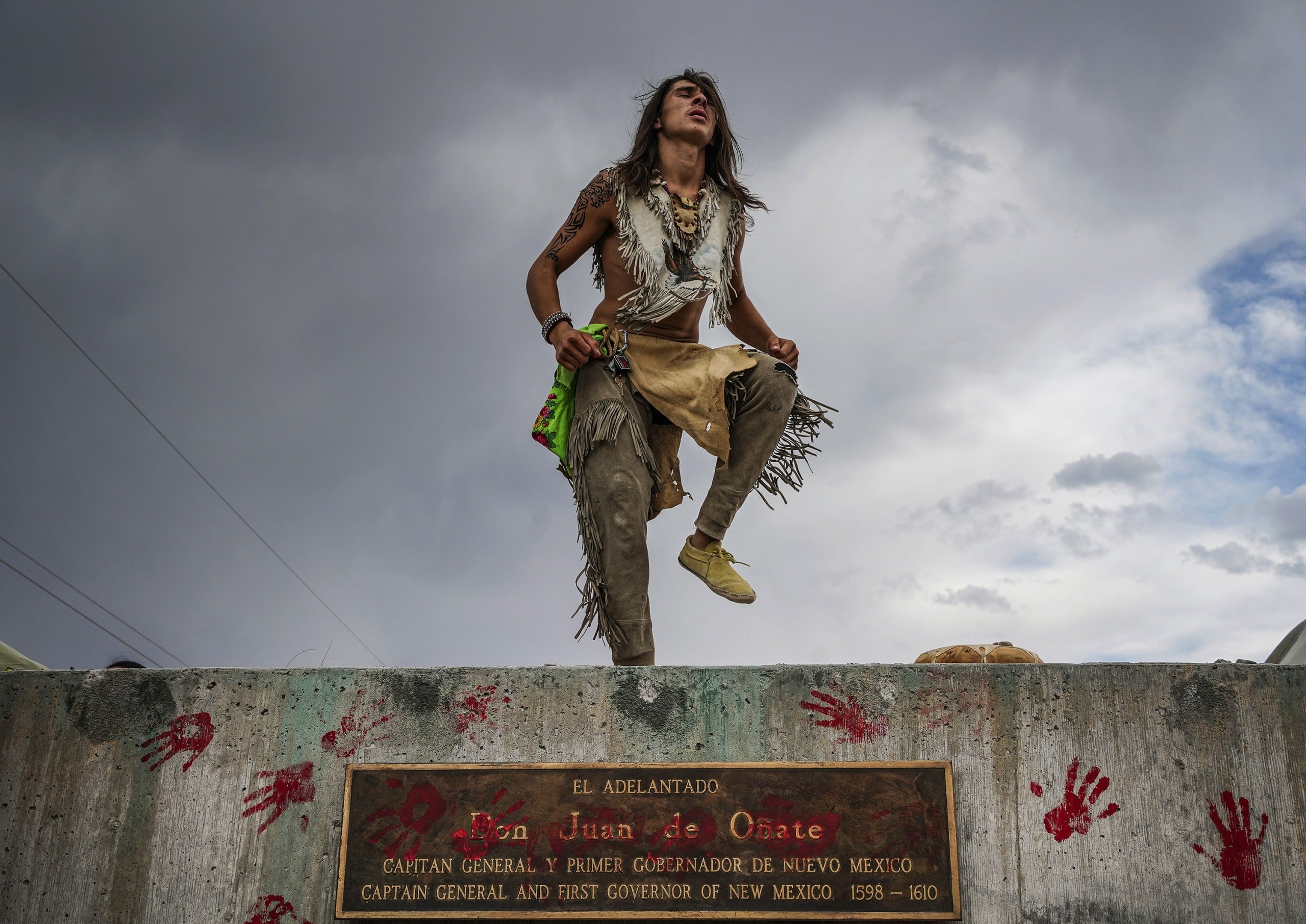
Than Tsídéh, 19, of the Ohkay Owingeh Pueblo, dances on the empty platform where a statue of Juan de Oñate was removed, 2020. Photo by Gabriela Campos/The Guardian
About Fellow and Mentor
Gabriela Campos is a Santa Fe–born photojournalist whose work centers on visual storytelling rooted in culture, community, and tradition. Since picking up her father’s old Pentax camera in high school, she has used photography to document the people and places of the Southwest with intimacy and depth. As a staff photojournalist for The Santa Fe New Mexican, her work spans daily news and long-form narratives, and has been featured in The New York Times, The LA Times, The Guardian, High Country News, and other national publications. Her photographs are held in the permanent collections of the Smithsonian Museum of American History, the New Mexico History Museum and the Spencer Museum of Art.
Roberto “Bear” Guerra is a photographer whose work contemplates our connections to each other and the natural world, while addressing contemporary social, cultural and environmental issues. He is the visuals editor at High Country News, a five-decade-old, non-profit publication that specializes in thoughtful, nuanced coverage of the western United States. Bear has led efforts to approach the magazine’s visual storytelling more holistically and expansively, earning recognitions from the American Society of Media Editors, American Illustration-American Photography, Indigenous Journalists Association and other organizations. He prioritizes collaboration with artists from diverse backgrounds and experiences, and mentors emerging talent. As one of the organizers of HCN’s first labor union, he has contributed to efforts towards a more equitable and sustainable workplace.