2026 Community Journalist Fellows
Rooted in Place. Connected Across Communities.
How is a story about communities in Nashville organizing to demand clean air connected to reporting on flooding and climate change impacting neighborhoods of color in Detroit?
What can a reporter in Philadelphia devoted to audience engagement learn from a reporter conducting data research in a small neighborhood in West Dallas?
Each year, the Altavoz Lab Community Fellowship brings journalists pursuing meaningful hyperlocal work into conversation.
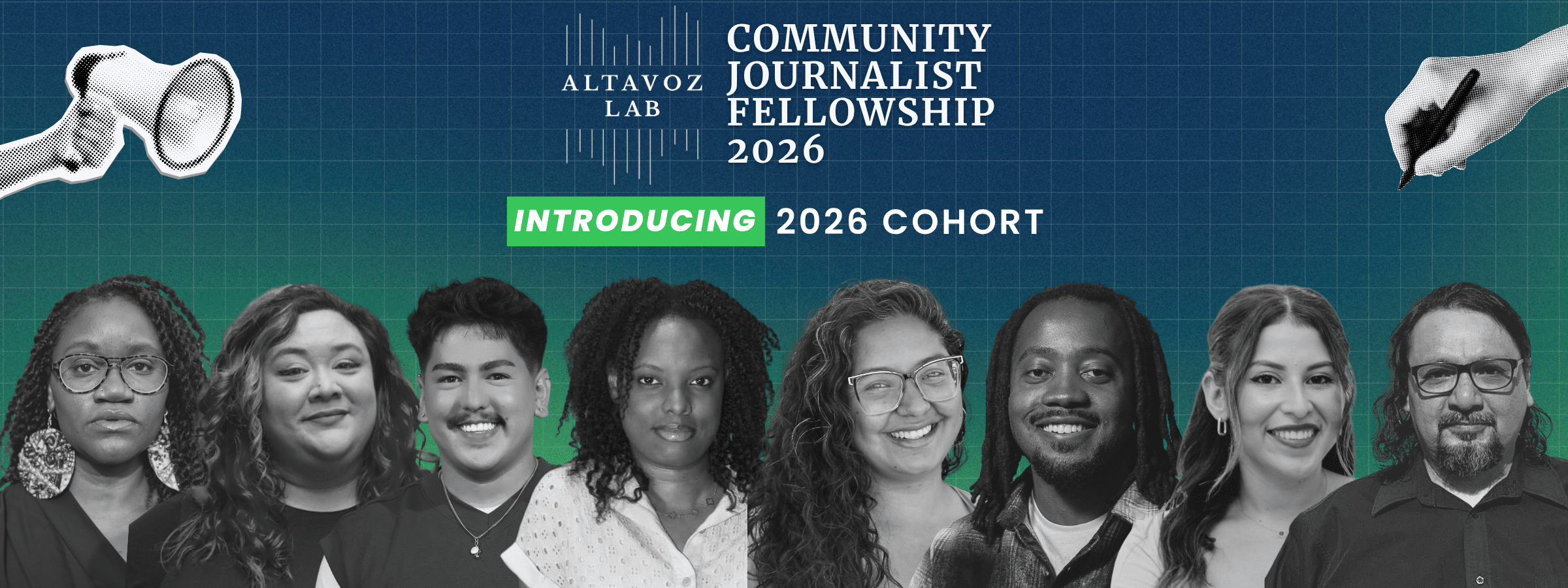
After a thoughtful review of 80+ applications from across the country, we are proud to welcome eight fellows to the 2026 Altavoz Lab Community Fellowship’s English and Spanish cohorts.
This year’s fellows join us from Pennsylvania, Michigan, Texas, Arizona, Kentucky, and Tennessee, alongside our inaugural Nick Oza Visual Fellow from New Mexico. They are reporters, editors, and visual storytellers working within community-first platforms and newsrooms who are also building and strengthening those spaces through their work.
Each fellow will work closely with an experienced mentor while receiving editorial guidance and audience engagement support from Altavoz Lab. Each fellow will receive between $6,000 and $11,000 in funding that may include audience engagement funds for their news outlets and additional editorial support from the Altavoz Lab team.
Over the next seven months, fellows will collaborate with mentors, peers, and the Altavoz Lab team on projects focused on housing displacement, environmental justice, immigration access, public health, Indigenous rights, LGBTQ+ rights, and community-driven media.
Some projects will take the form of investigative reporting. Others will center audience engagement, resource-building, and community dialogue — ensuring that reporting not only documents inequities, but also helps people navigate them.
This work is part of Altavoz Lab’s broader commitment to supporting journalists rooted in place and creating the conditions for them to grow, lead and continue serving their communities.
English Cohort

Ethan Bakuli
(Detroit, MI)
Planet Detroit
Project: Investigating how flooding and aging water infrastructure in Metro Detroit are impacting the health of Black and brown communities.
Ethan Bakuli is a Kenyan American independent journalist reporting on climate, labor, and health issues in Detroit, where he works and lives. As a Climate Solutions and Service Journalism fellow with Planet Detroit, he has covered the effects of industrial pollution, extreme weather, and utility shutoffs across Southeast Michigan. Ethan prides himself on informing residents and connecting communities through multimedia storytelling and engagement. He holds a degree in Afro-American studies and journalism from the University of Massachusetts Amherst. His work has appeared in USA Today, Chalkbeat, Prism, Capital & Main and other publications.

MENTOR:
Brentin Mock
Editorial Consultant
The Mock-Up, LLC

Jennie Trejo
(Dallas, TX)
Dallas Free Press
Project: Reporting on housing displacement and cultural preservation in La Bajada, a historic Mexican-American neighborhood in West Dallas under pressure from rapid development.
Jennie Trejo is a first-generation journalist, educator, and community builder with a passion for equitable access to information and storytelling. Her career spans classrooms and newsrooms: She began as a dual-language teacher in Dallas ISD through Teach for America and later led citywide journalism initiatives with the Dallas Media Collaborative. She has also mentored emerging journalists and led youth programs that blend media literacy with life skills. At Dallas Free Press, she oversees content strategy and partnerships that center community voices and make civic systems easier to navigate.
MENTOR:
Mago Torres
Trainer and Investigative & Data Journalist
Independent

Lorenzo Gómez
(Phoenix, AZ)
LOOKOUT News Publications
Project: Exploring the intersection of LGBTQ+ rights, tribal sovereignty and cultural preservation within the Navajo Nation.
Lorenzo Gómez is a Chicano multimedia journalist based in Phoenix. He reports on politics, culture and minority communities. He holds a Master of Mass Communication from the Walter Cronkite School of Journalism and Mass Communication. In 2025, he reported from Panama City, Panama and Agua Prieta, Mexico where he examined the impacts of global immigration policy on vulnerable communities. As a Carnegie-Knight News21 fellow, he produced an in-depth investigation into immigration enforcement and the environmental impact of border wall construction. His work has been featured in the Associated Press, CALÓ News, LOOKOUT Publications, Navajo Times, Phoenix New Times and Cronkite News. Lorenzo has a background in community organizing, including an initiative to establish Flagstaff, Arizona’s first Indigenous Cultural Center.
MENTOR:
Cindy Carcamo
Nieman Fellow and Journalist
Harvard University

Tonya Abari
(Hermitage, TN)
The Nashville Banner
Project: Covering how vulnerable communities in middle Tennessee are organizing for clean air amid weakening environmental protections.
Tonya Abari is a Nashville-based independent journalist, author, collaborator, essayist, and reviewer. With a wide range of interests including Black maternal health, food, climate/environment, and culture, her words have been featured locally and nationally in The Nashville Banner, Prism, The Economic Hardship Reporting Project, Essence, the Nashville Scene, AllRecipes, Offrange, USA Today, Parents, Good Housekeeping, The Bump, PBS Kids for Parents and many more. Abari is passionate about building deep relationships with communities, collaborative and accessible reporting, and centering the voices of those most impacted by local policy and systemic inequities. When she’s not writing, Tonya is discovering new places, dancing to an early 2000s playlist, homeschooling two inquisitive children, and enjoying food pop-ups with her family, whose names all begin with “T.”

MENTOR:

Lottie Joiner
Multimedia Journalist
Independent
Enraizados en un lugar. Conectados entre comunidades.
¿Cómo están conectados una historia sobre comunidades marginalizadas en Nashville organizándose para exigir aire limpio y un reportaje sobre el efecto de las inundaciones y el cambio climatológico en vecindarios de color en Detroit?
¿Qué puede aprender una reportera en Filadelfia que se dedica a la participación de audiencias de un reportero realizando una investigación de datos en un pequeño barrio de West Dallas?
Cada año, la Beca para periodistas comunitarios de Altavoz Lab fomenta el diálogo entre periodistas que están realizando trabajo hiperlocal significativo.
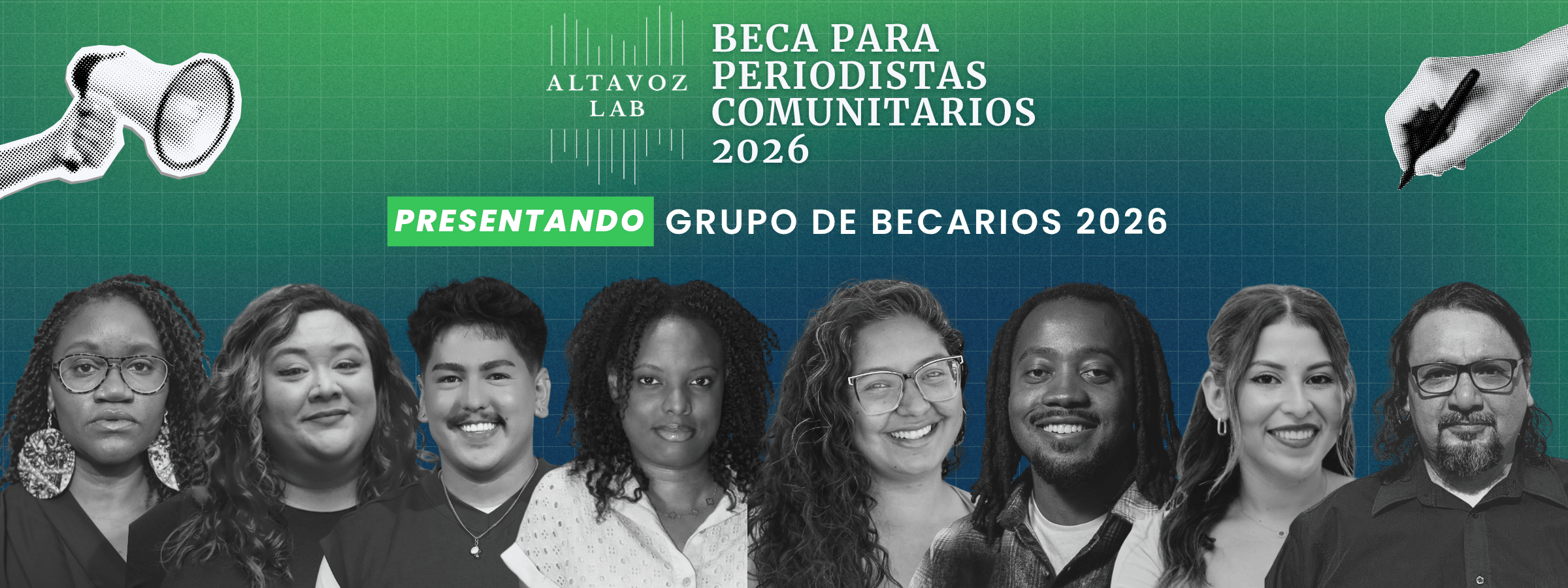
Luego de revisar a fondo más de 80 solicitudes de todo el país, nos enorgullece darles la bienvenida a ocho becarios a las cohortes en inglés y español de la Beca para periodistas comunitarios de Altavoz Lab 2026.
Los becarios de este año se unen a nosotros desde Pensilvania, Michigan, Texas, Arizona, Kentucky y Tennessee, junto a la becaria que inaugura nuestra Beca Visual Nick Oza de Nuevo México. Son reporteros, editores y narradores visuales trabajando en plataformas y salas de prensa, que a la vez están construyendo y fortaleciendo dichos espacios mediante su labor.
Cada becario recibirá la mentoría de un colega, a la par que el apoyo de nuestra coach de audiencias y se le otorgarán entre $6.000 y $11.000 en fondos que pueden incluir dinero para sus medios destinado a la participación de audiencias y apoyo editorial adicional del equipo de Altavoz Lab.
Durante los próximos siete meses, los becarios colaborarán con mentores, colegas y el equipo de Altavoz Lab en proyectos enfocados en desplazamiento de viviendas, justicia ambiental, acceso a la inmigración, salud pública, derechos indígenas, derechos LGBTQ+ y medios impulsados por la comunidad.
Algunos proyectos tomarán la forma de reportajes investigativos. Otros se enfocarán en participación de audiencias, desarrollo de recursos y diálogo comunitario, asegurándose que los reportajes no solamente documenten las desigualdades, sino que también ayuden a las personas a enfrentarlas.
Este trabajo es parte del compromiso más amplio de Altavoz Lab a apoyar a periodistas arraigados en sus localidades y crear las condiciones para que crezcan, se desempeñen como líderes y sigan atendiendo a sus comunidades.
Beca Español – Spanish Cohort 2026
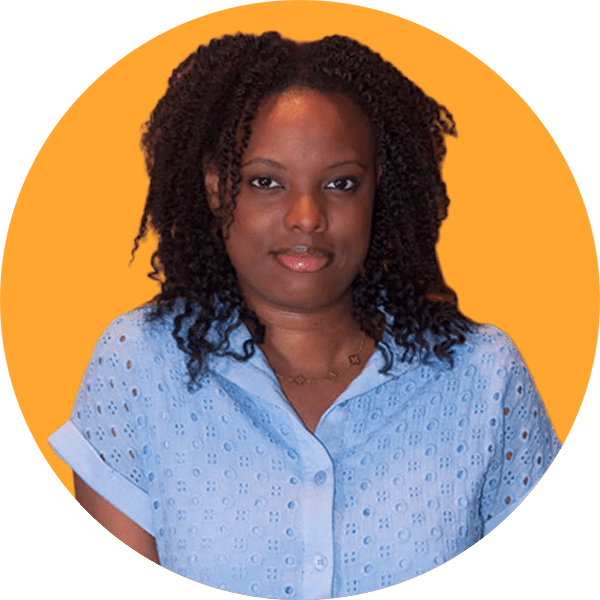
Lixandra Díaz Portuondo
(Filadelfia, PA)
Centro Integral de la Mujer Madre Tierra
Proyecto: Analizando los efectos emocionales, económicos y sanitarios de las pérdidas perinatales en las inmigrantes latinas en Filadelfia
Examining the emotional, financial and healthcare effects of perinatal loss on immigrant Latinas in Philadelphia.
Lixandra Díaz Portuondo es una periodista afrocubana viviendo en Filadelfia, graduada de la Facultad de Comunicación de la Universidad de La Habana. Es miembro del Centro Integral de la Mujer Madre Tierra. Investiga sobre el impacto de las políticas públicas en la comunidad migrante, especialmente en las mujeres. incluyendo: los protocolos para las denuncias por violencia de género, los programas de licencia de maternidad, los centros de salud asequibles y los recursos disponibles para la superación y el emprendimiento local. Es la creadora de Discursivas, un proyecto dedicado al análisis de los discursos y narrativas contemporáneas desde una perspectiva interseccional. Tras graduarse, inició un proceso de formación docente con especialización en análisis del discurso. Produjo radiodocumentales y podcasts e investigó sobre la representación mediática de las comunidades afrodescendientes. Ha colaborado con agencias de noticias, emisoras de radio, medios digitales y agencias de marketing tanto en Cuba como en el extranjero.
Lixandra Díaz Portuondo is an Afrocuban journalist based in Philadelphia. She is a graduate of the School of Communication at the University of Havana and a member of the Central Integral de la Mujer Madre Tierra. She conducts research on the impact of public policy on the migrant community, especially women, including: protocols for reporting gender-based violence, programs for maternity leave, affordable healthcare centers and available resources for empowerment and local entrepreneurship. She is the creator of Discursivas, a project devoted to the analysis of contemporary discourse and narratives, from an intersectional perspective. After graduating, she spearheaded a teacher training program focused on discourse analysis. She produced radio documentaries and podcasts and researched media representation in Afrodescendent communities. Lixandra has worked with new agencies, radio stations, digital media and marketing agencies in Cuba and abroad.

MENTOR:

Dagmar Thiel
Fundadora y Directora de Capacitación
Media Resilience Network
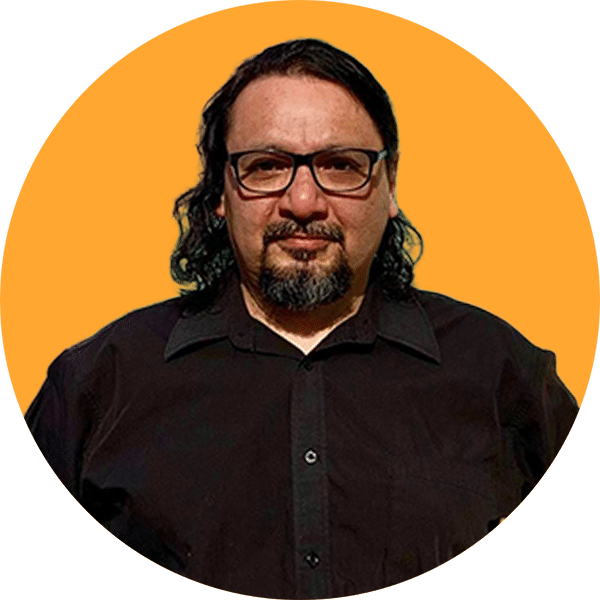
Luis Eduardo De León Fernández
(Louisville, KY)
La Esquina de Kentucky
Proyecto: Desarrollando una serie de publicaciones periodísticas visibilizando a la comunidad latina en un estado conservador.
Developing a series of stories documenting the lives and perspectives of Latino communities in a state shaped by conservative policy environments.
Luis Eduardo De Léon Fernández es un periodista, músico y artista visual guatemalteco de origen que creció en las áreas rurales del sur de México. Estudió la primaria en diferentes áreas rurales del estado de Chiapas y sus estudios secundarios los realizó en el Colegio Miguel Hidalgo (La Salle) en Tapachula, Chiapas, México. Estudió Ciencias de la Comunicación con énfasis en periodismo y comunicación alternativa en la Universidad Rafael Landívar, en Ciudad de Guatemala. En dicho país trabajó como operador de estaciones de radio comerciales y fue jefe de información de la Radio Nacional de Guatemala. Luego se desempeñó como jefe de información de un proyecto que se llamó El Noticiero (hoy es Guatevisión). Fue corresponsal de Radio Núcleo, México. Su último trabajo en Guatemala fue parte del equipo de investigación de elPeriódico. Por cuestiones de seguridad, emigró a Estados Unidos en donde ha participado en periódicos locales y en inglés, así como NPR local en Louisville, Kentucky.
Luis Eduardo De Léon Fernández is a journalist, musician and visual artist of Guatemalan descent who grew up in rural areas of southern Mexico. He attended elementary school in various rural areas of the state of Chiapas and completed high school at Colegio Miguel Hidalgo (La Salle) in Tapachula, Chiapas, Mexico. He studied communication science with a focus on journalism and alternative media at Rafael Landívar University in Guatemala City. He worked in said country as head of commercial radio stations and was head of information for Guatemala National Radio. Later he served as news editor for a project called El Noticierio (now Guatevisión). He was a correspondent for Radio Núcleo, México. His most recent role in Guatemala was as part of the investigative team at elPeriódico. Because of security concerns, he emigrated to the U.S., where he has been involved with local newspapers and English-language media, as well as the local NPR station in Louisville, Kentucky.

MENTOR:
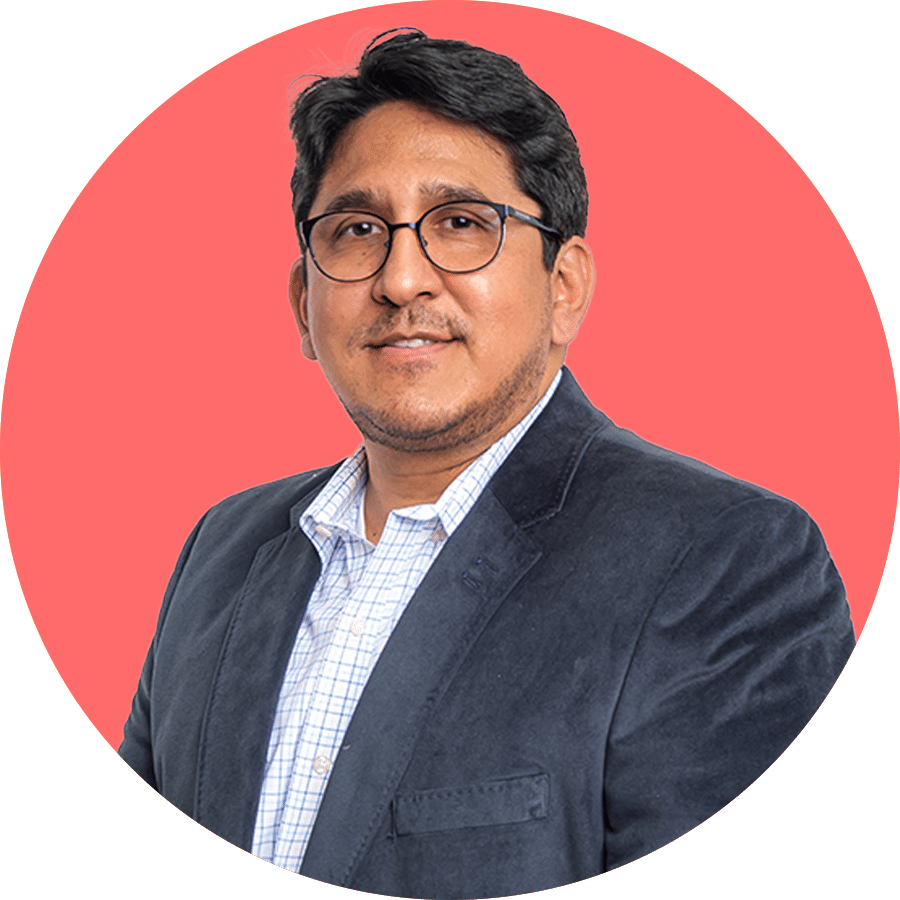
José Luis Castillo
Fundador
La Esquina TX
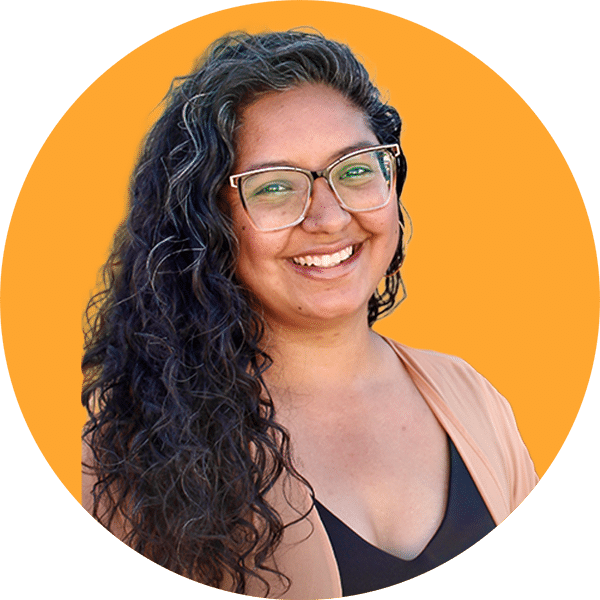
Stephanie Casanova
(Tucson, AZ)
Borderlands Collaboration: Somos Tucson / Caló News
Proyecto: Creando una guía bilingüe de recursos para ayudar a las familias a navegar los procesos de detención de inmigración y visitas.
Creating a bilingual resource guide to help families navigate immigration detention and visitation processes.
Stephanie Casanova es una periodista bilingüe independiente de Tucson, Arizona, que ha cubierto historias comunitarias durante más de 10 años. Le apasiona el periodismo narrativo, profundo e investigativo que es inclusivo y refleja la diversidad de las comunidades que cubre. Su trabajo ha sido publicado por CALÓ News, Somos Tucson, AZ Luminaria y Prism. Anteriormente trabajó como reportera para Signal Cleveland, Chicago Tribune y Arizona Daily Star. Stephanie es becaria investigativa 2026 de la Ida B. Wells Society for Investigative Reporting y en 2021 completó becas con la SPJ Future Leaders Academy, Maynard 200 y IRE Data Journalism Bootcamp. También fue mentora de estudiantes en la SPJ Future Leaders Academy en 2022.
Stephanie Casanova is an independent, bilingual journalist from Tucson, Arizona, who has covered community stories for over 10 years. She is passionate about narrative, in-depth and investigative storytelling that is inclusive and reflects the diversity of the communities she covers. Her work has been published by CALO News, Somos Tucson, AZ Luminaria and Prism. She previously reported for Signal Cleveland, the Chicago Tribune and the Arizona Daily Star. Stephanie is an Ida B. Wells Society for Investigative Reporting 2026 investigative fellow and in 2021 she completed fellowships with SPJ Future Leaders Academy, Maynard 200 and IRE Data Journalism Bootcamp. She mentored students in SPJ Future Leaders Academy in 2022.
MENTOR:
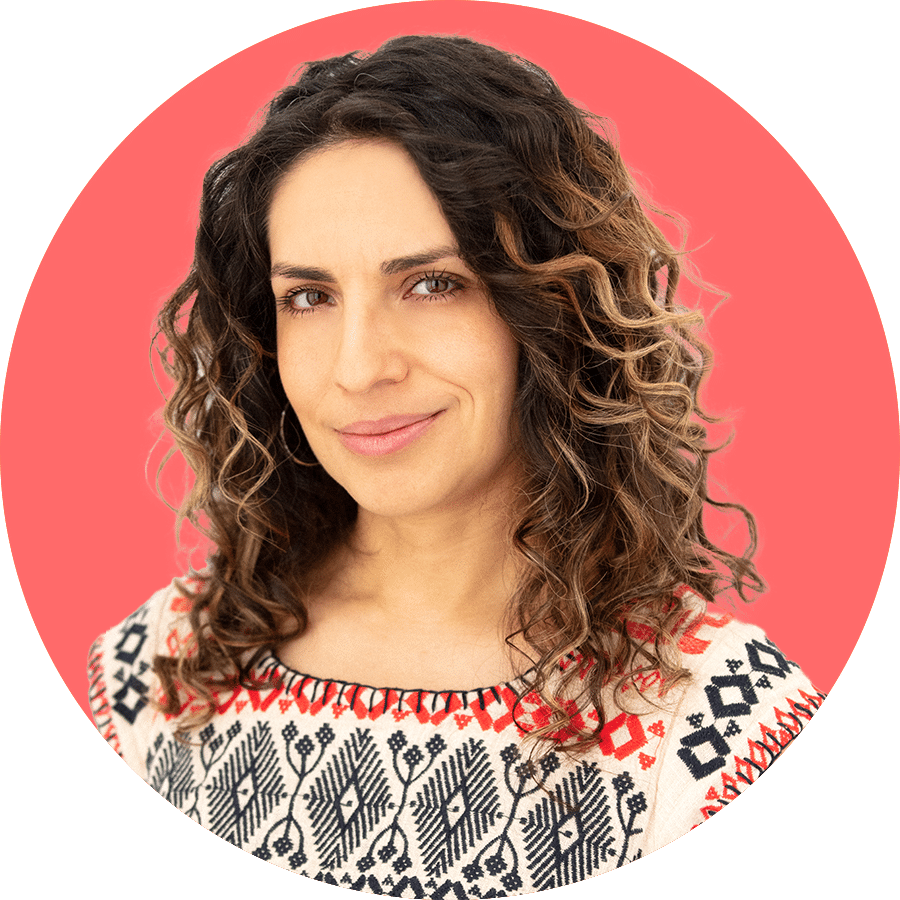
Mónica Ortiz Uribe
Periodista
Independiente
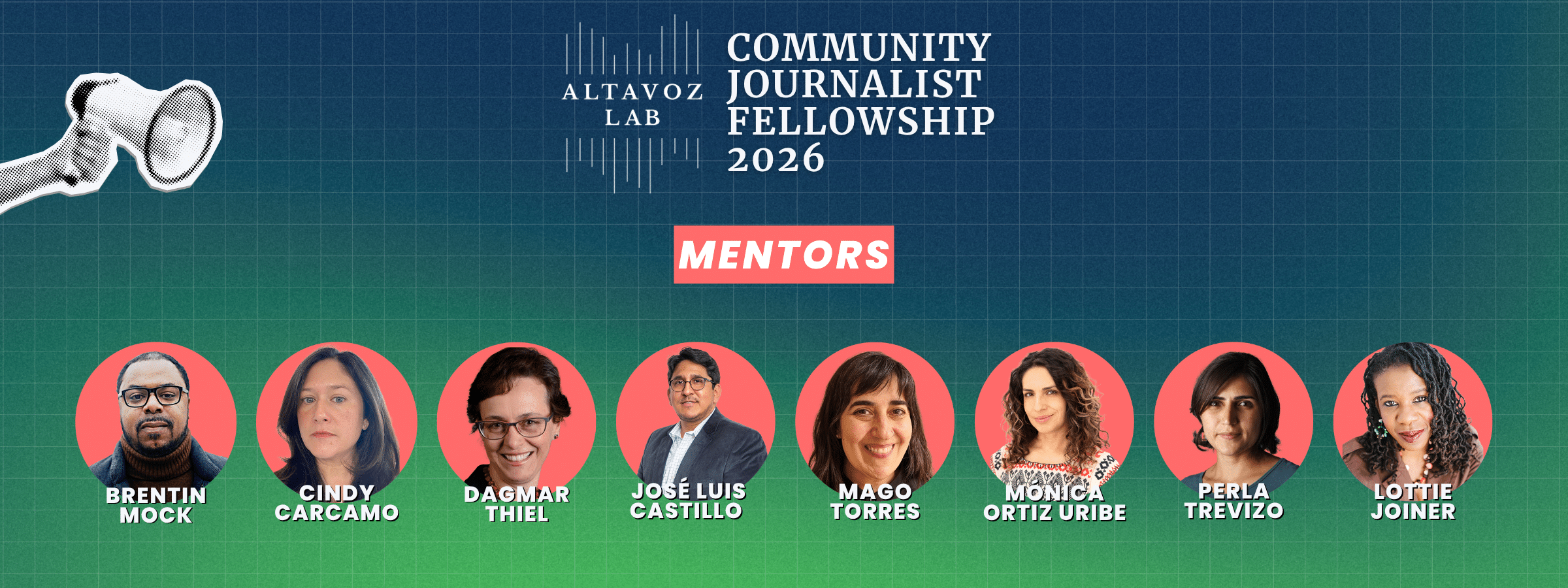
Mentors
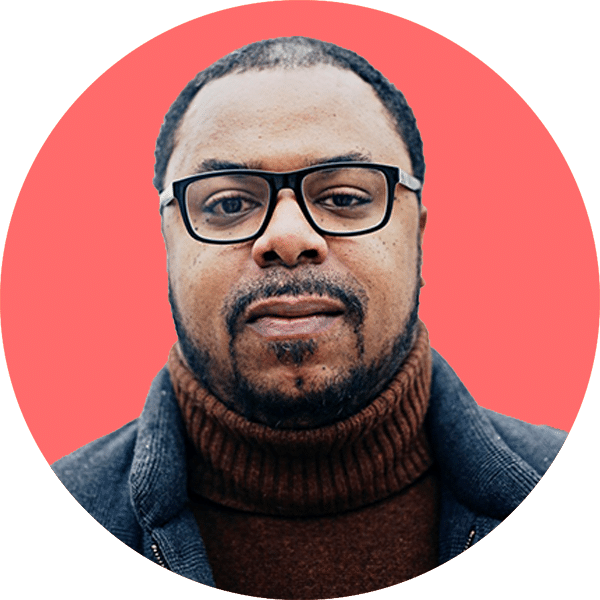
Brentin Mock is a reporter, writer and editor who specializes in stories about democracy, race, place, environment, and culture. His work can be found in Bloomberg News, The Atlantic, The New York Times, The Washington Post, The Nation, Grist, The American Prospect and Le Monde. He’s also made appearances on MSNBC (currently MS NOW), CBS News, PBS and Democracy Now. In 2021, he co-authored the book anthology Four Hundred Souls: A Community History of African America, 1619-2019, edited by Dr. Keisha N. Blain and Ibram X. Kendi. The book became a New York Times Bestseller, a finalist for the Andrew Carnegie Medal, and was named one of the best books of the year by The Washington Post. His expertise includes urban policy, environmental justice, climate politics, housing, finance, criminal justice, voting rights, election administration and race. He currently works as an editorial consultant for his company The Mock-Up, LLC.
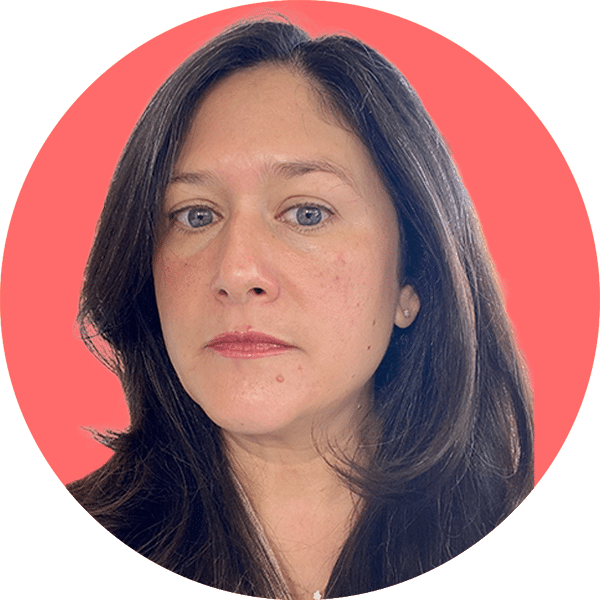
Cindy Carcamo is a Nieman Fellow at Harvard University. She is a California-based journalist who most recently worked as a staff writer for the Los Angeles Times’ Food section. She previously covered immigration as a Metro reporter for the Times and served as Arizona bureau chief and national correspondent in the Southwest. A Los Angeles native, she has reported from Argentina, Guatemala, Honduras and Mexico. From 2003-2012, she was a staff writer at the Orange County Register, where she covered immigration, the environment, politics, and law enforcement issues. She also has written for Reuters, The Guardian and El País. In 2023, Carcamo was honored as one of the ten most influential journalists in California by the Latino Journalists of California-CCNMA.
Dagmar Thiel is an Ecuadorian-German journalist. She is the founder and director of training at the Media Resilience Network, a Vita Activa initiative that provides emergency emotional assistance and guidance for journalists in marginalized and underserved areas of the United States. Previously, she was director of the Fundamedios’ U.S. office, where she promoted freedom of expression in the region and created support systems for journalists in exile. She is co-author of the UNESCO report “Displaced Voices: An X-Ray of Latin American Journalists in Exile.” In addition, Dagmar is an Altavoz Lab mentor and works with Plumas Invitadas, a community journalism initiative of Conecta Arizona.
José Luis Castillo, born in Lima, Peru, is the founder of La Esquina TX. He has nearly 30 years of experience as a journalist, editor, and translator, and more than a decade in consumer protection and investigative reporting. He has worked with outlets including Agencia Internacional de Noticias EFE, Associated Press, Agence France-Presse, Noticias Telemundo Digital, Telemundo Houston, Univision Houston, Univision’s Aquí y Ahora, The New York Times Syndicate, La República (Peru), La Vanguardia (Spain), among others. He has been recognized with multiple regional Emmy Awards and other journalism prizes for his investigative work in television and print media.
Lottie Joiner is an award-winning multimedia journalist whose work explores the conditions and lived experiences of those in underserved and marginalized communities. She has written extensively about the Civil Rights Movement, with pieces in The Washington Post, USA Today, The Daily Beast, The Guardian and Time. During her tenure as editor-in-chief of The Crisis, the magazine won several national awards. Lottie also hosted and produced the weekly Facebook Live show Crisis Conversations, which focused on how the pandemic impacted minority communities and the 2020 racial reckoning. Lottie is a former board member of the American Society of Journalists and Authors and the Fund for Investigative Journalism. She is a current board member for Free Speech TV and Journalism and Women Symposium. In 2025, Lottie was named a 2025-2026 Rosalynn Carter Fellow for Mental Health Journalism.
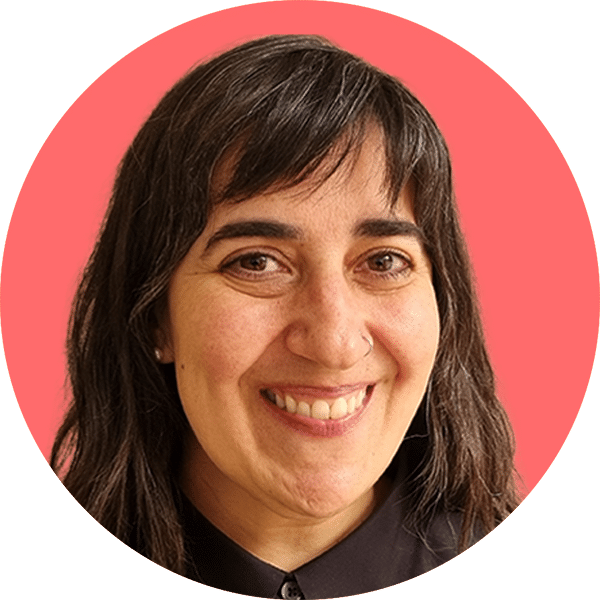
Mago Torres is a trainer and an investigative and data journalist. She has worked on award-winning long-form investigations and developed programs that support collaborations, data-driven stories, and investigative journalism in the US and internationally. She has worked for The Examination, Open News, the Latin American Center for Investigative Journalism, the Data-Driven Reporting Project at Northwestern University and with the International Consortium of Investigative Journalists on the investigations like FinCEN Files, Luanda Leaks and the Pulitzer Prize-winning Panama Papers. She also co-lead the investigation “El país de las dos mil fosas,” and was a John S. Knight Fellow at Stanford University.
Mónica Ortiz Uribe is an independent reporter born and raised in El Paso who writes about the U.S.-Mexico border and the American Southwest. Her work has appeared on National Public Radio and published in the El Paso Times. In 2020, she co-hosted “Forgotten: The Women of Juárez,” a podcast about the disappearance and murder of women in El Paso’s Mexican sister city that was named a top 10 podcast of 2020 by The Atlantic.
