🎉 Our Fellow’s Impact: Rooted in New Mexico: Gabriela Campos on trust, community and visual storytelling

For many photojournalists, pursuing a career means leaving home. For Gabriela Campos, some of the most meaningful stories are found close to home.
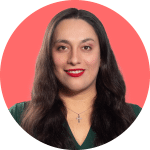
As the inaugural recipient of the Nick Oza Visual Fellowship, Campos will spend the next year documenting the women of New Mexico’s lowrider culture, a project rooted in the same values Nick Oza championed throughout his career: trust, humanity and community-centered journalism.
Thanks to supporters who helped launch the fellowship, journalists like Campos can continue telling stories from the communities they call home.
Q&A with Gabriela Campos
You’ve said that being a photojournalist in your own community is “such a gift.” What does it mean to document the people, traditions and places that raised you?
To survive in journalism, many photojournalists have to leave home and follow the work wherever it takes them. It’s a privilege to be able to tell the stories of the people, traditions and places I grew up among. These customs and traditions are my own, so I bring a level of understanding and connection that someone from outside the region may not have. I’m not documenting something unfamiliar to me — I’m documenting the communities that shaped who I am.
Your fellowship project centers the women of New Mexico’s lowrider culture, a space often described through a masculine lens. What stories, moments or emotions are you hoping to capture through this work?
I’ve been photographing the lowrider community for more than 10 years, with a deeper focus over the last five. During the coming year, I hope to build a greater intimacy with the women in this community. In the past, I’ve mostly photographed them at cruises, car shows and gatherings around Albuquerque. Through this fellowship, I hope to move beyond those public moments and enter their lives in a more meaningful way. I want to see them as fully realized people — not just as lowriders, but in their homes, with their families, and within the everyday spaces that shape who they are.
A lot of your photography feels deeply personal and grounded in trust. Can you share a moment in your career when someone allowed you into their world in a way that stayed with you?
As a photojournalist for a daily newspaper, I enter people’s worlds every day and step into their shoes for a few hours. One day I’m with a farmer in Albuquerque’s North Valley; another day I’m with a first responder, a teacher or a poet. That’s why it’s difficult for me to point to a single moment.
One assignment that has stayed with me happened in 2020 at the height of the COVID-19 pandemic. My colleague, Robert Nott, and I were given rare access to spend a shift inside a COVID unit with nurses and doctors. I watched them lean on one another as they carried the weight of an impossible situation. I watched them provide dignity and care to those who had passed away and make difficult phone calls to loved ones. I witnessed their strength, compassion and resilience despite the circumstances they faced every day.
After the assignment, I had to quarantine for two weeks. It was one of the hardest stories I’ve ever worked on, but also one of the most important. It reminded me how much trust people place in journalists when they allow us into their lives during their most vulnerable moments.
Experiences like that are why I love this work. It gives me the opportunity to briefly step into so many different worlds and better understand the people around me.
The Nick Oza Visual Fellowship was created to support journalists rooted in the communities they document. As part of this inaugural fellowship, what are you most excited to gain, explore or build alongside Altavoz Lab?
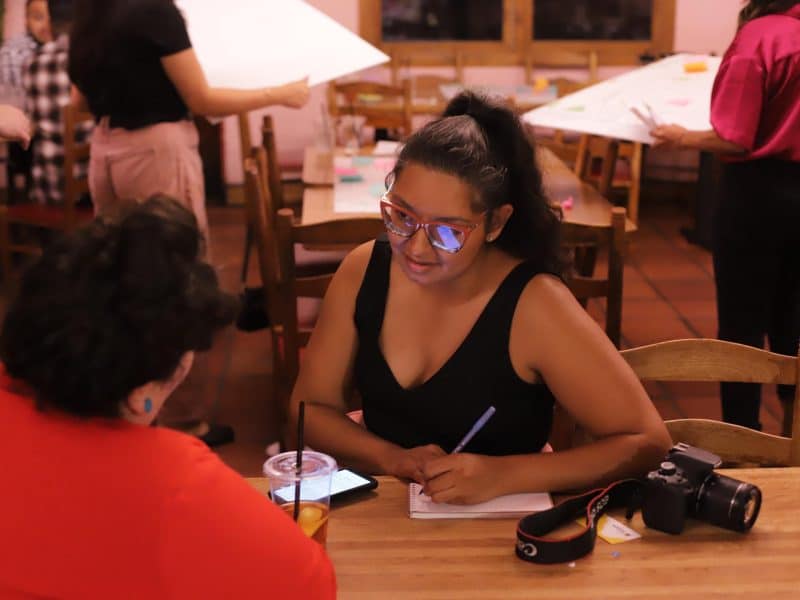
There are so many things I’m excited about. Most of all, I’m excited to finally have the time and support to fully develop a project. I’m grateful to have Bear Guerra as my photo editor. We’ve worked together before, and I deeply admire the way he helps shape stories. Just as meaningful is knowing I have a group of talented journalists in my corner. Being part of Altavoz Lab reminds me that this work doesn’t have to be done alone. It feels good to have a team.
From photographing Holy Week pilgrimages to lowrider culture and Indigenous resistance, your work reflects the spirit of the Southwest with intimacy and care. What responsibility do you feel as a visual storyteller from this region?
My responsibility is to tell stories honestly. I don’t want to sensationalize the Southwest, nor do I want to romanticize it. I want to document it as it exists today. These aren’t random stories or strangers passing through my lens — they are my communities and my people. Because of that, I feel a responsibility to tell their stories with dignity, grace and beauty.
The first Nick Oza Visual Fellowship was possible because many individuals contributed what they could. Community support built this program. As we work to make the fellowship a permanent home for community-rooted visual journalism, supporters can help ensure that more storytellers like Gabriela Campos have the time, resources and mentorship needed to tell the stories that matter most.
A version of this was published on our monthly newsletter, if you would like to receive our news subscribe to En Voz Alta on the sidebar.
Author