🏳️🌈 Marriage equality in the Navajo Nation
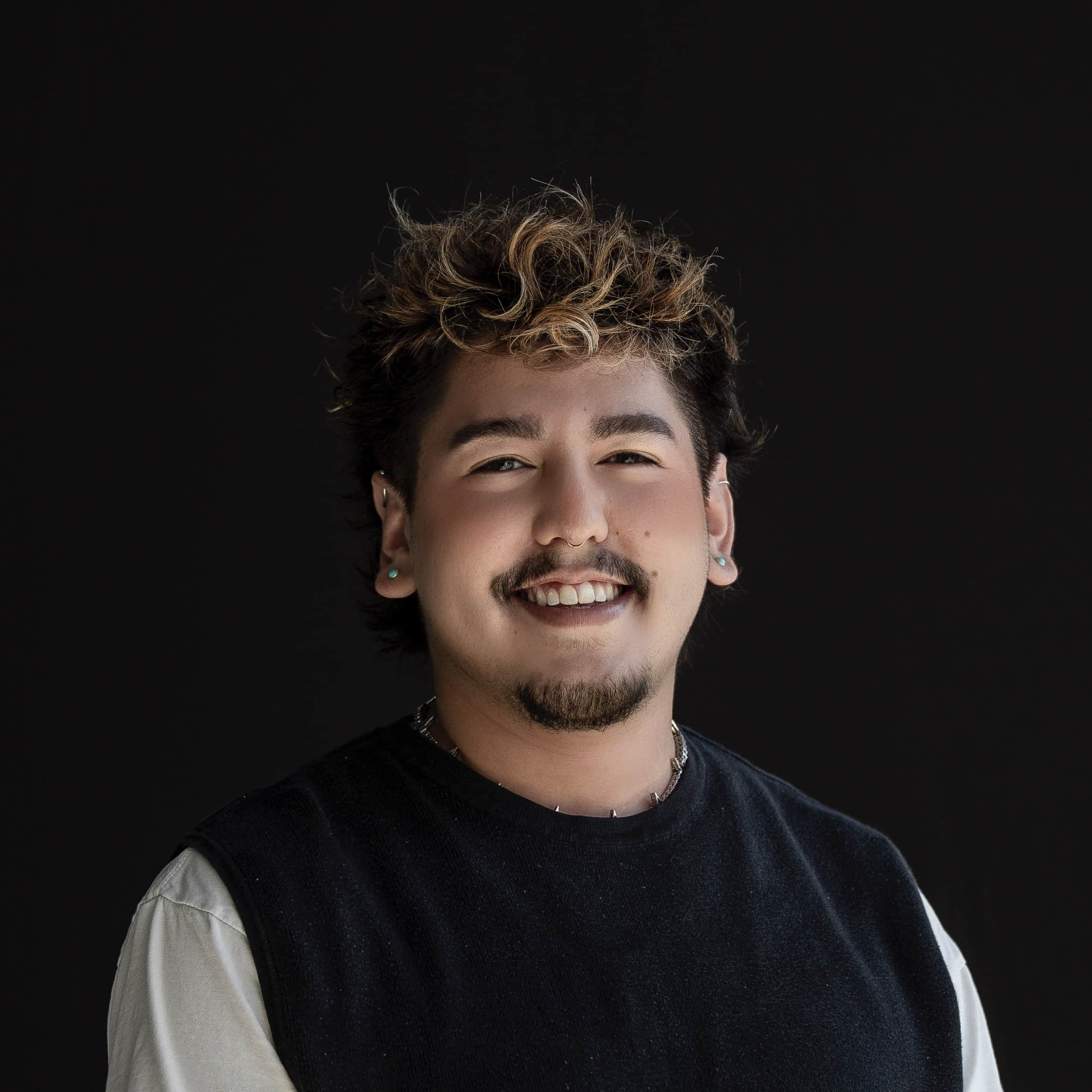
Altavoz Community Journalist Lorenzo Gómez is developing a project examining marriage equality in the Navajo Nation through a lens that goes beyond policy reporting to include history, culture, and lived experience. His work focuses on centering LGBTQ+ Diné voices while exploring how colonial law, tradition and sovereignty intersect in shaping contemporary realities.
Q&A with Lorenzo Gómez:
As an Altavoz Lab fellow, what drew you to this reporting project on marriage equality in the Navajo Nation, and why is it important to explore it beyond a traditional policy lens?
A little over a year ago, I was writing a story about Indigenous drag queens when the issue of marriage equality on the Navajo Nation was first brought to me. It shocked me to see that the country’s largest Native American tribe did not recognize same-sex marriage. With such a vibrant queer community that I’ve been lucky enough to witness, I felt like an issue like this deserved attention that went beyond basic reporting. There are layers of historical context, traditional beliefs and colonial influence that need to be unpacked, and the Altavoz Fellowship provided me the time and resources to do exactly that.
How do Diné histories of gender and sexuality complicate or challenge the narratives shaped by colonial law and Christianization?
Like other precolonial societies, queer people played an important role. The Nadleeh, or two-spirit people of the Diné, traditionally embodied the balance between masculine and feminine energies, serving as cultural mediators, leaders, and spiritual figures whose roles in Diné creation stories demonstrate that gender diversity was historically integral to society long before the introduction of colonial law.
In your reporting, how are you centering the lived experiences of LGBTQ+ Diné people and families navigating relationships and unions that are not legally recognized?
Before a pen ever hit the paper, I wanted to be sure we allowed the community to speak. We are holding community listening sessions and creating space for queer Diné people to come as they are and share their experience on their terms. As an outsider, my first assignment was to sit down and listen. Although this is inevitably my reporting project, I’m not here to produce a research paper. I want it built off the real, lived experience of folks who have a stake in the matter.
What does sovereignty mean in this context, where tribal governance, federal policy, cultural preservation, and contemporary politics intersect in the marriage equality debate?
Sovereignty is an interesting word in this context. The Navajo Nation is considered a sovereign entity by the United States. But if you asked a Diné person whether they felt they were part of a sovereign nation, you might get mixed answers. The reality is that, in order for the Navajo Nation government to function, it must ultimately abide by the laws set forth by the United States.
Why is it important for organizations like Altavoz Lab to support journalism that focuses on Indigenous LGBTQ+ communities, and what impact do you hope this fellowship-supported work will have?
For many years, mainstream journalism has exoticized and sensationalized stories from Indigenous communities. Non-Indigenous outlets often come in, extract the story and leave. Many never show their face again in the communities. The same can be said for the LGBTQ+ community. At the intersection of the two, you get a community that is often overlooked by typical daily news outlets. LOOKOUT and Altavoz Lab have created a unique opportunity to begin rebuilding those bridges.
If you would like to receive our news and other updates, subscribe to En Voz Alta on the sidebar.
Author