🎥 How Carlos Berríos Polanco is reframing migration in Puerto Rico through radical humanization

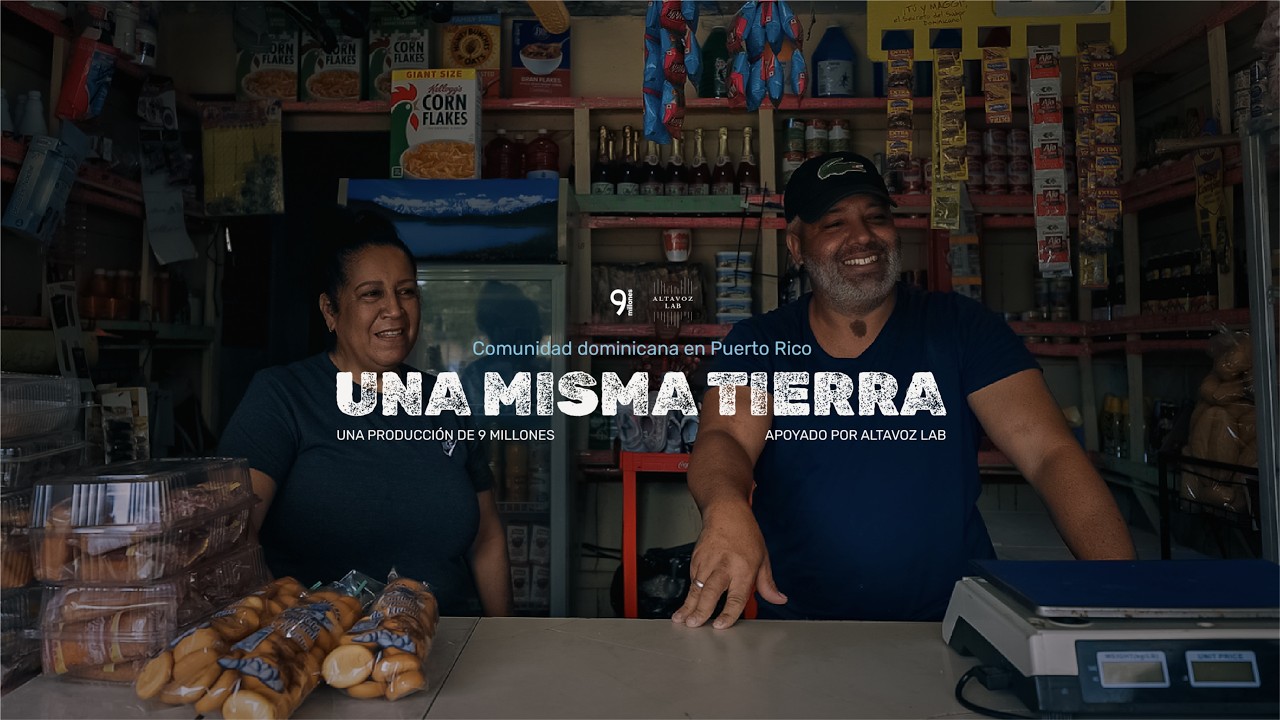
Storytelling that restores humanity can feel revolutionary in a media landscape often dominated by headlines about borders, raids and political rhetoric. Through his Una misma tierra (“One Land”) series, Altavoz Lab fellow Carlos Berríos Polanco is documenting immigrant communities in Puerto Rico with intimacy, nuance and historical depth, challenging stereotypes while preserving cultural memory.
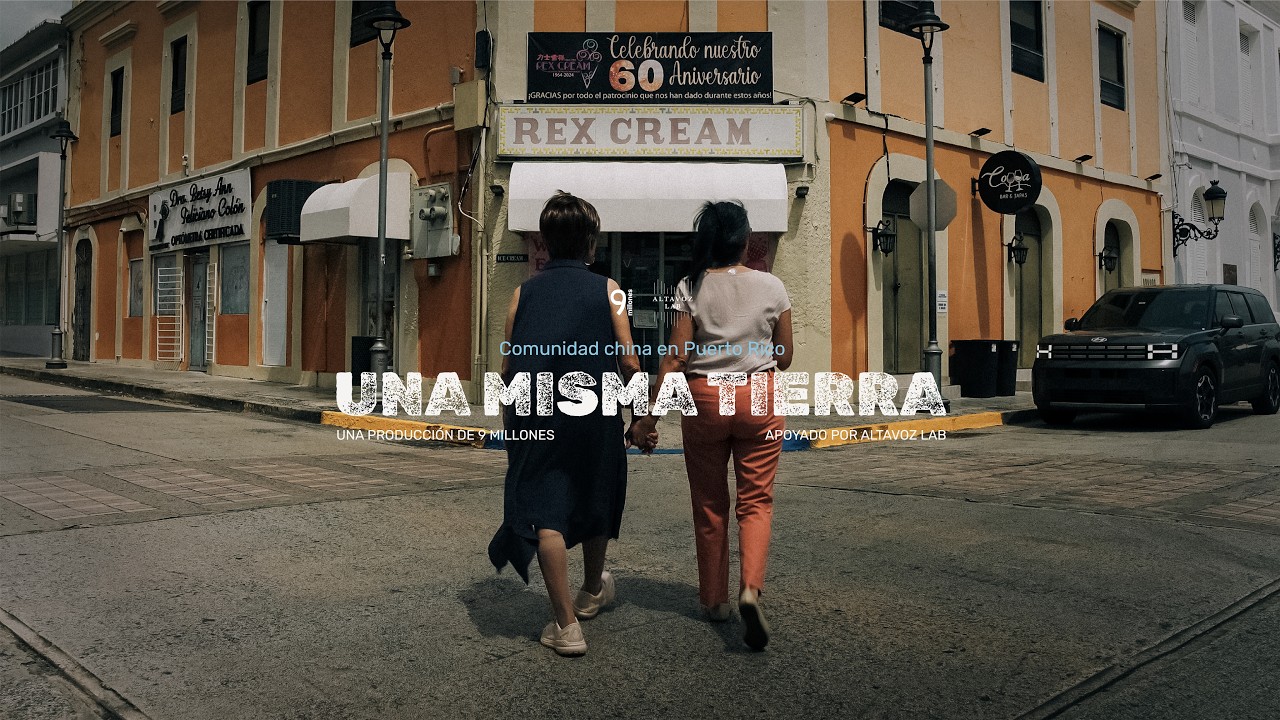
His people-focused reporting moves beyond statistics and fear-based narratives to tell stories of Dominican families navigating displacement, Chinese Puerto Ricans carrying generational histories, and Palestinian migrants whose experiences echo Puerto Rico’s own relationship with colonialism and survival. Stories like “In Exile: A Dominican migrant claims to be wrongfully deported from Puerto Rico” and “How the Chinese community has made their home in Puerto Rico” do more than inform; they confront erasure.
What makes Carlos’ work especially urgent is its timing. As anti-immigrant rhetoric escalates globally and communities face growing surveillance and criminalization, Una misma tierra insists on something increasingly rare in journalism: empathy without simplification.
Below, Carlos reflects on his project’s origins, its emotional and logistical challenges, and why preserving these stories in the voices of the communities themselves matters now more than ever.
Q&A with Carlos Berríos-Polanco
Una misma tierra centers deeply on human stories. What moment or experience made you realize these were stories you needed to tell?
While many Puerto Ricans talk about the archipelago being a welcoming place for immigrants, that has never been completely true. It’s certainly more welcoming, culturally, than the United States, but racism and bigotry against the migrant community is still common. Puerto Rico’s immigrant community is fairly small — about 100,000 out of 3.2 million — which means that the average Puerto Rican has very little experience with the archipelago’s different migrant communities. We wanted to humanize Puerto Rico’s different migrant communities, treating them as individuals who have real lives, not as monoliths in the ways that they’re often depicted in media, both here and abroad. At the same time, we wanted to combat racist misinformation that has been spread about these communities. Because my mother is a Dominican migrant, it was a no-brainer to center a community that I was already intimately familiar with that also has the largest immigrant population in Puerto Rico. Then, we chose the Chinese community because their restaurants are everywhere, so they’re very visible to the average Puerto Rican, but most do not know very much about them. Finally, we chose the Palestinian population because we wanted to bring more attention to the ways they’ve been forced to leave their home because of decades of oppression, colonialism, and genocide, which resonates with Puerto Rico’s own history.
What has been the most challenging part of reporting or producing this project, especially when working with communities whose stories are often overlooked or misrepresented?
We really expected the hardest part to be getting people to talk to us at a time when the government has ramped up oppression against immigrants. However, we were surprised by how open people have been. The hardest part has been keeping everything organized. This has been a very ambitious project for our small team, and it’s certainly been a learning experience about the best way to organize ourselves and everything we recorded in a way that is conducive to the editing process.
Your piece on the Chinese community in Puerto Rico highlights layered histories of migration and identity. What drew you to explore this community within the Una misma tierra series?
We always knew we wanted to have one episode devoted to the Chinese community because they’re a very visible immigrant minority in Puerto Rico, but most people know very little about them. As Dr. José Lee Borges says in the documentary, Puerto Ricans interact with the 500 or 600 Chinese restaurants nearly every week, but do not know how the community came to the archipelago or how they have contributed to our culture. We also wanted to steer away from framing the community exclusively through the Chinese restaurants to not perpetuate the stereotype that they only exist within their restaurants, which is why we focused on the history of the Chinese ice cream shops, another important part of the community’s history in Puerto Rico that few people know about.
How do you approach honoring cultural memory while also capturing present-day realities of these communities?
We wanted to focus on present-day realities that these communities are living through. However, we always wanted to give some historical context to how these three communities made their ways to Puerto Rico, which is where the historical memory piece comes in. Many of these communities have passed on their personal stories of migration through oral tradition alone, and we wanted to document some of them to keep them alive even after the person who shared them was gone. We hoped to honor the cultural memory of these communities by having members speak about it in their own words, instead of letting somebody else write it for them.
As an Altavoz Lab fellow, how has this experience shaped your voice as a journalist or storyteller? What do you hope audiences take away from your work?
I’m coming away from this experience with a much broader understanding of Puerto Rico’s migrant communities, as well as a significantly deeper understanding of how to work with video projects. As far as what I hope audiences take away from these documentaries, it’s just that they should care more about their neighbors, especially now, when many of them are being disappeared by masked immigration agents.
A version of this was published on our monthly newsletter, if you would like to receive our news subscribe to En Voz Alta on the sidebar.
Author