🎉 Our Fellow’s Impact: Leslie Hurtado on reporting at the intersection of immigration and environmental justice

As immigration enforcement intensifies across the country, community journalists are documenting not only its immediate impacts, but also how immigrants’ fears shape every aspect of daily life. For Altavoz Lab Community Journalism Fellow Leslie Hurtado of Cicero Independiente, reporting on environmental justice has become inseparable from reporting on immigration, public health and community trust.
Based in Cicero, Illinois, just outside Chicago, Cicero Independiente is a bilingual, community-centered newsroom that covers the issues most important to local residents, including immigration, environmental justice, housing and public health.
In this Q&A, Leslie reflects on how recent ICE activity has influenced her reporting, the importance of community engagement in uncertain times and why creating trusted spaces for residents to gather, ask questions and share their experiences remains at the heart of local journalism.
Q&A with Leslie Hurtado
How have recent ICE raids impacted the community members you work with in Cicero?
ICE activity has made it much harder to create spaces where community members feel safe gathering. Since enforcement activity increased, many residents have been afraid to attend meetings, speak publicly, or participate in community events. A WBEZ and Chicago Sun-Times analysis found that 580 people were detained in the Chicago area from January 1 through mid-March 2026. That fear is very real in Cicero.
It has taken a lot of effort to remind residents that, although we are media workers, we are also community workers. We want to answer questions that directly affect them under this administration, report on the policies shaping their lives, and connect them with professionals who can help with legal, housing, financial, or other support.
Cicero Independiente sees the environmental justice beat as essential to immigration reporting. In many ways, every beat is connected to immigrant communities because the majority of Cicero residents are directly affected by issues. Residents are not experiencing pollution, flooding and immigration fears as separate issues. They are living through them all at once. That reality shapes how they move, what they question, and whether they feel safe enough to speak out.
Can you describe the role your community engagement events play in your fellowship work, and why you see them as important right now?
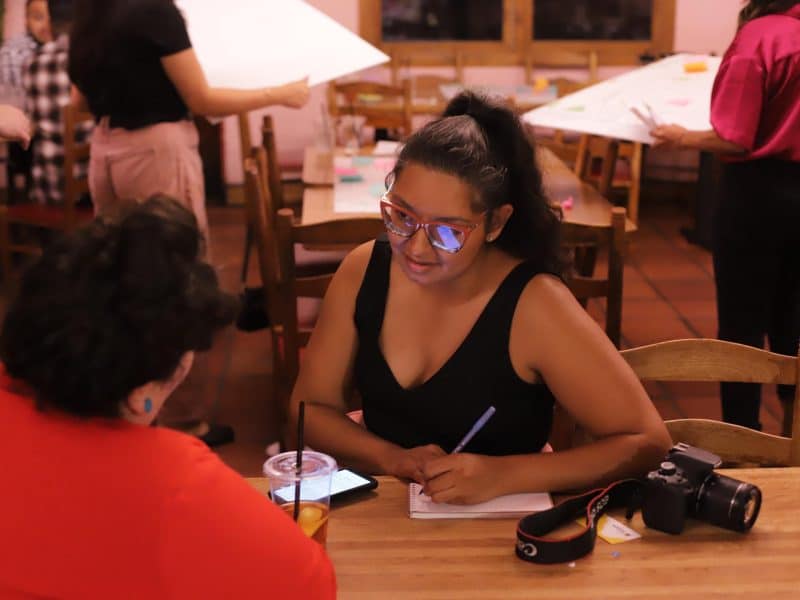
Our community engagement events are central to my fellowship because they help us build trust outside of formal reporting settings. One of our strongest efforts was meeting youth and families at a local Cicero cafe that has supported us since our inception. During after-school hours, teens and families gather there, so it functions as a community hub.
After evaluating which spaces would help us reach our young audience, we decided that a local cafe was the best option because it is both a safe space and a cultural space for many residents. The fear of ICE raids has also affected local businesses, many of which are run by or serve immigrant families. With Altavoz’s support, we were able to support a local cafe that has been vocal and resourceful for immigrant families.
It is important to note that when we began this reporting series, we faced challenges reaching young people. Now, with immigration fears looming, we have turned to the spaces they trust most. We offered free meals and fresh flowers for families in need as a way to build trust, invite conversation, and make it easier for residents to engage with us.
We also worked with our talented artist, Emily Reynoso, to create an art workshop where families could imagine their own development proposals through unique art collages. This helped residents, especially young people, see themselves as part of the planning process rather than just people affected by decisions made without them.
Have fears surrounding ICE activity affected people’s willingness to speak out, attend meetings or advocate for environmental and public health concerns?
Yes. The community is afraid, but that has not stopped people from asking questions of town leadership in Cicero or seeking support from local organizations. When it comes to environmental concerns, many residents care deeply, but they often do not know where to start, especially because the town is not as transparent as it should be. Development projects like Ability Park are not always widely publicized in the area, and community engagement is often inactive.
In the first story of our series, which examined contamination at Phil Fuentes Ability Park, we door-knocked nearby homes and found that several residents did not know about the project until we told them. That makes it harder for people to be vocal. Still, their concerns exist, and we are committed to listening. Our listening session gave us an opportunity to meet residents during a difficult time and hear about both environmental concerns and ICE-related fears.
Melanny Buitron, an immigrant rights advocate and Cicero resident who attended our engagement event around Ability Park said:
“Another big thing that I would consider in building any type of park infrastructure is the reality that people are going through. People are afraid of going outside. Given the current reality, with ICE raids and people staying inside their homes, me included, I’m afraid to go out. What are my community and elected leaders doing to ensure that I feel even a little bit safer?”
In your experience, how has the stress and uncertainty caused by ICE raids impacted the mental health and overall well-being of families in the community?
The stress and uncertainty caused by ICE activity have affected families’ mental health, sense of safety, and willingness to participate in public life. Immigration fears intersect directly with environmental justice because vulnerable and undocumented residents may be exposed to environmental harms but feel unsafe questioning officials, attending meetings or demanding accountability.
That reality has shaped my reporting process. Trust-building has become slower, more intentional and more personal. I cannot assume people will speak simply because an issue affects them. I have to meet them where they already feel safe, explain why the reporting matters and show that their concerns about housing, immigration, health and the environment are connected.
In this uncertain time, it is community organizers and local businesses that are leading in connecting us with our vulnerable neighbors, so we can give them the resources and answers they need.
A version of this was published on our monthly newsletter, if you would like to receive our news subscribe to En Voz Alta on the sidebar.
Author