
ICE doesn’t release people ‘solely based on illness.’ Yari’s case in Arizona is proof of that
Arbella “Yari” Rodríguez Márquez has been locked up in Eloy Detention Center since February 2025. As the two-year mark nears, her loved ones across Arizona remain hopeful and ignited, fighting for her release.



This story was originally published by CALÓ News in collaboration with Somos Tucson, with the support of Altavoz Lab.
Haz clic aquí para leer este reportaje en español.
When Sonia Almaraz walked into a friend’s get-together almost 15 years ago, she didn’t expect to leave with a soulmate — Arbella “Yari” Rodríguez Márquez.
“We’ve been best friends ever since we met,” Almaraz said. “It was not planned. It just happened.”
Their lives became deeply intertwined. Together they ran a business called Excandalo LGBT Magazine and Butterfly Printing, which included what they called Arizona’s first Spanish-language LGBTQ+ magazine. On weekends, they organized fundraisers for other people in Phoenix’s queer community. They even had a band together called “Dyvano,” where they performed cumbias, norteños and a little bit of románticas.
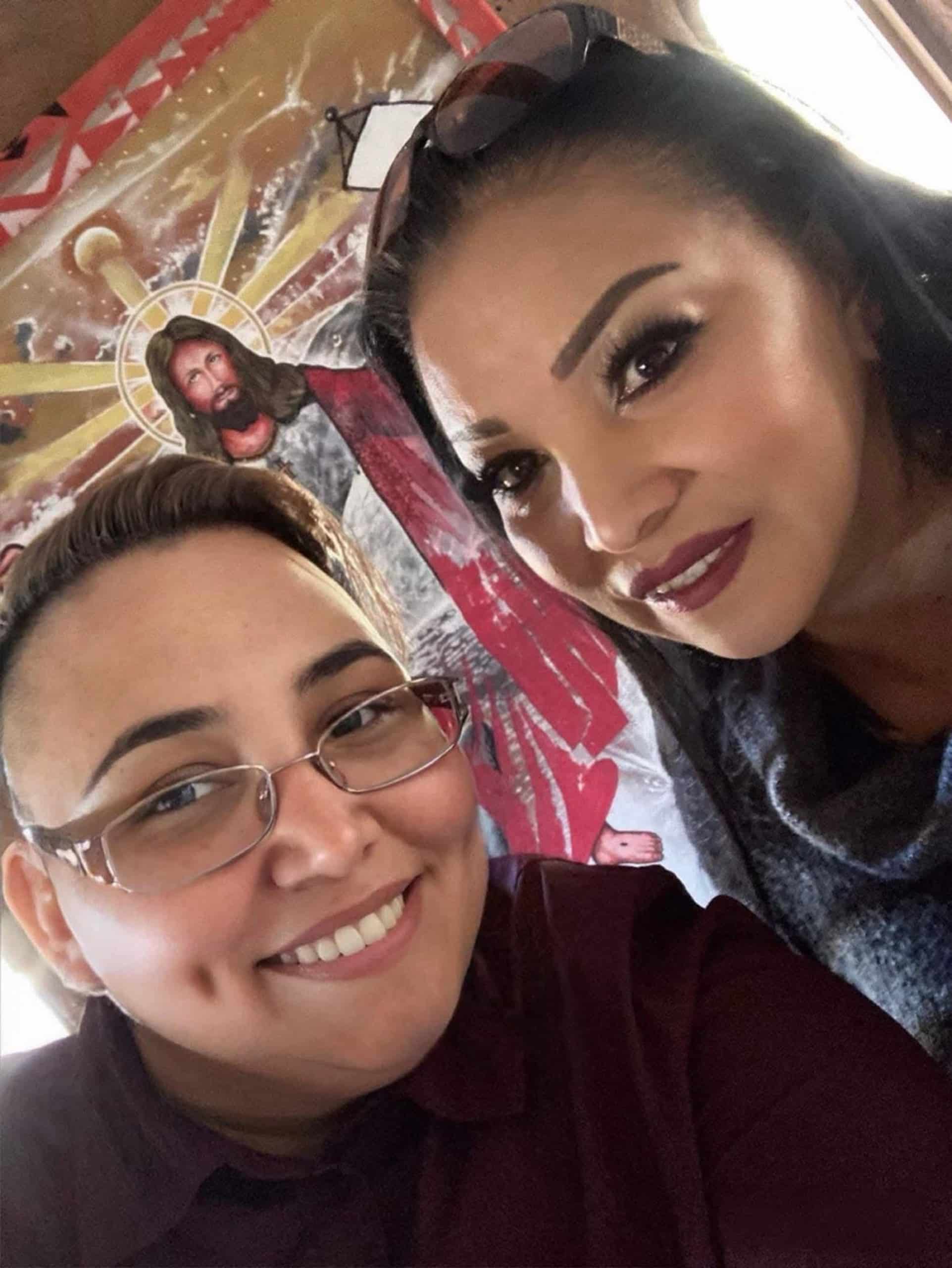
For over a decade, she said they were inseparable — until Feb. 10, 2025.
The couple picked up a coworker from Nogales, Sonora, and planned to give him a ride to Tucson. That night, Almaraz returned to Phoenix. Yari did not.
Unbeknownst to them, the co-worker they were traveling with lacked the legal paperwork to enter the U.S. and was using a false identity. At the border, agents detained all three. After four hours “locked in a cage,” Almaraz, who is a U.S. citizen, was released, but U.S. Border Patrol agents told her that Yari would remain in custody.
At first, Almaraz believed that meant a few days or at most weeks. Yari had permanent residency status, her green card in hand when attempting to re-enter the U.S. She believed she had done nothing that would keep her locked away for long, especially given her battle with lymphocytic leukemia, a cancer affecting blood and bone marrow.
“We really thought, ‘this is gonna be something fast,’” Almaraz said. told .
After a couple of days, Yari called. She was initially held at the Florence Correctional Center before being transferred to the Eloy Detention Center, a privately operated immigration detention facility in the Arizona desert that advocates have described as the “deadliest immigration detention center in the U.S.”
They cried through much of that first conversation.
“She kept apologizing and saying, ‘I didn’t do anything wrong,’” Almaraz recalled.
That conversation took place over a year and a half ago.
Since then, Yari’s health has continued to deteriorate. Almaraz said. In addition to chronic lymphocytic leukemia, since she’s been in custody, she has been diagnosed with lymphedema and rheumatoid arthritis, Almaraz said.
A statement from Immigration and Customs Enforcement (ICE) disputes these claims.
“At the time of her arrest, Rodriguez Márquez reported no medical conditions and stated that she was not taking any medications,” ICE spokesperson Fernando Burgos said. “According to her medical records, there is no indication that she has cancer, and ICE reports that claims regarding lymphocytic leukemia are unsubstantiated.”
Burgos noted that “ICE policy does not provide for the release of detainees solely on the basis of illness.”
She has lost more than 70 pounds, developed significant swelling in her legs and lymph nodes and now relies on a walker — and at times a wheelchair — to get around. Almaraz said Yari continues to experience pain and fatigue and has struggled to receive consistent treatment from outside specialists.
Sonix Flores Bahena, Trans Queer Pueblo’s media director, pushed back on ICE’s characterization of Yari’s condition, saying that while chronic lymphocytic leukemia can progress slowly, it still requires appropriate medical monitoring and can become more serious amid illness, infection and prolonged physical or psychological stress.
They also disputed records describing her as having “missed” follow-up appointments, arguing that ICE controls whether she is transported to outside medical care. Flores Bahena said the group wants any assessment of Yari’s leukemia and its progression to come from a leukemia specialist, rather than medical staff at the Eloy Detention Center.
“Illness, infection, inadequate living conditions and prolonged physical and psychological stress can cause flare-ups, and that is when it becomes life and death,” Flores Bahena said. “That is what ICE is doing to Yari..
When asked about the conditions that have led to her current mobility issues, ICE said the agency “will not speculate about the cause of her reported mobility limitations or characterize her current condition beyond the information previously released. ICE does not have additional information addressing whether her mobility has changed since February 2025.”
Today, during the single hour Almaraz is allotted to spend with her partner each week, she sees a woman who hardly resembles the person she knew before detention.
“You don’t see her smile. She doesn’t laugh. She doesn’t joke,” Almaraz said. “She’s just not the same person.”
Never-ending court dates and appeals
Federal court records show that Yari, who was then a lawful permanent resident, was detained after a passenger in her vehicle presented an Arizona identification card belonging to someone else. Customs and Border Protection (CBP) accused Yari, who was driving the car, of helping the man enter the country illegally.

She denied knowing he lacked the proper documents, and court records indicate she had no prior criminal history and was never criminally charged with smuggling. Instead, immigration officials placed her in civil removal proceedings.
An immigration judge denied Yari’s application for asylum and ordered her removed to Mexico in September 2025, a decision she appealed to the Board of Immigration Appeals.
This summer, a federal magistrate judge concluded that her prolonged detention without an individualized bond hearing raised due process concerns and recommended that she receive one within seven days.
However, on Aug. 24, Immigration Judge Kathryn DeAngelis went against that conclusion, finding that “multiple instances of engaging in unlawful activity is demonstrative of [Yari’s] disregard for orders of this court and no bond amount could ameliorate those concerns.” ICE’s statement echoed that ruling.
Again, her lawyers appealed that decision on Sept. 10.
Her case is extreme, but the allegations surrounding her care are not isolated.
Yari was detained during the initial uptick of ICE activity at the direction of the Trump administration’s revamped Department of Homeland Security (DHS).
By July 11, 2026, ICE was holding 65,765 people nationwide, according to data compiled by Syracuse University’s Transactional Records Access Clearinghouse. About 71% had no criminal conviction.
New numbers from the Deportation Data Project indicate that ICE arrests reached an all-time high of nearly 50,000 people in July.
Recent investigations into allegations of medical neglect suggest Yari’s ordeal is part of broader concerns about health care in immigration detention. Human Rights Watch and Physicians for Human Rights reported in June that at least 52 people died in ICE custody during the first 500 days of Trump’s second term, documenting cases in which people with cancer and other serious conditions experienced delayed or inadequate care.
The investigation also found that initial medical screenings were conducted mostly by licensed practical nurses, rather than advanced practice providers.
Those risks can be compounded for queer detainees. In a 2024 report, 28 of 41 LGBTQ+ or HIV-positive people interviewed about federal immigration detention reported inadequate or denied medical care. However, the current scale is difficult to measure after ICE stopped publicly reporting the number of transgender people in its custody in 2025, according to the Vera Institute.
A public campaign to bring Yari home
Since February of last year, Almaraz, Trans Queer Pueblo (TQP) and other Phoenix advocacy groups have campaigned for Yari, gaining momentum as she nears the two-year mark in detention.
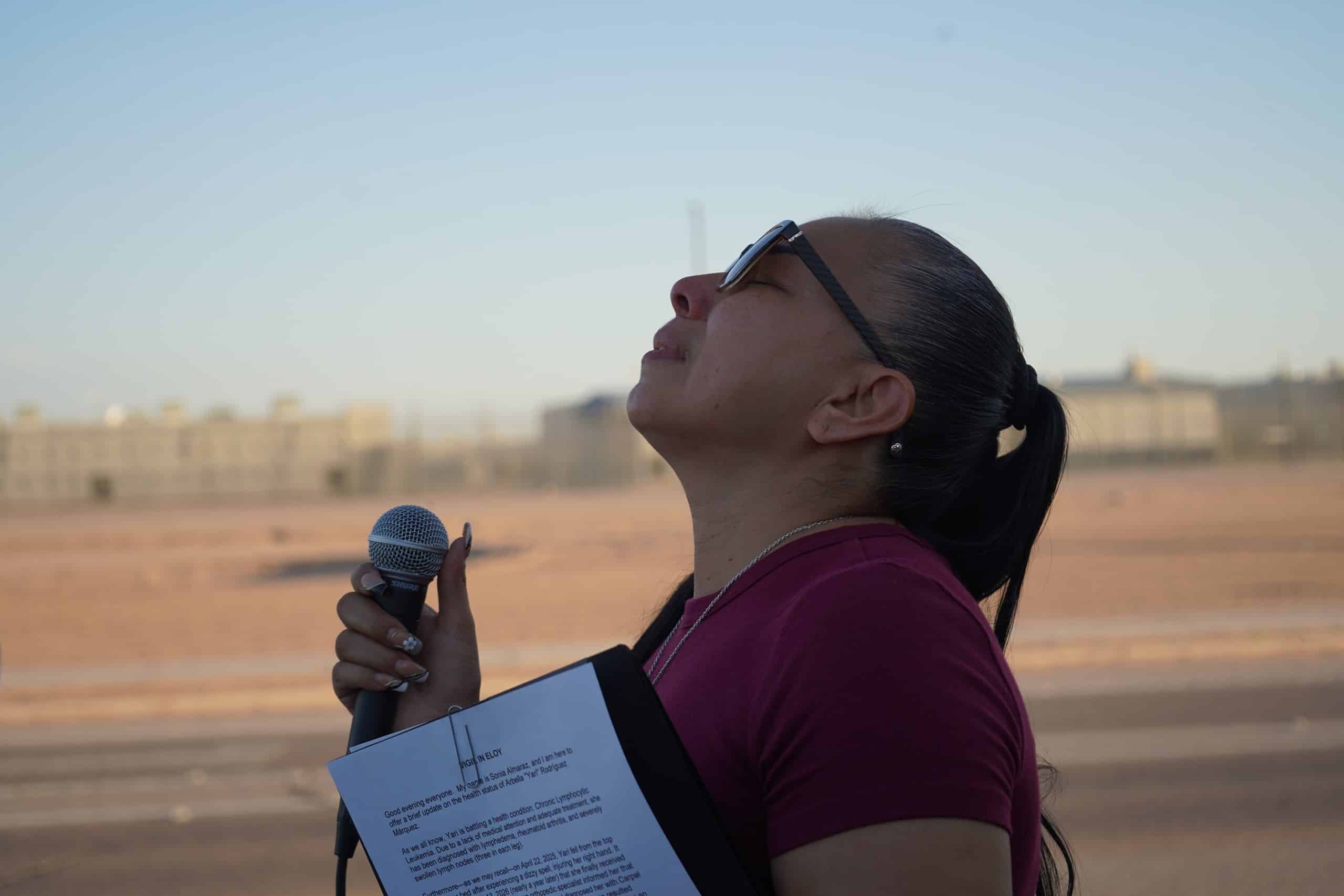
Flores Bahena said the Free Yari Campaign has become part of something bigger. They said community calls to end the mistreatment of those in detention, especially those who are queer, disabled or chronically ill, have begun to resonate with more people.
“So many people see themselves in Yari’s story,” Flores Bahena said. “Today, it’s Yari, and then it could be us, and then who’s going to be there to fight for us?”
They also noted that much of the organizing has come from some of the most vulnerable communities.
“As queer people, we are the ones doing a lot of the heavy lifting,” they said, “But when it comes time to decide who’s going to be on TV, it’s never queer. It’s never trans.”
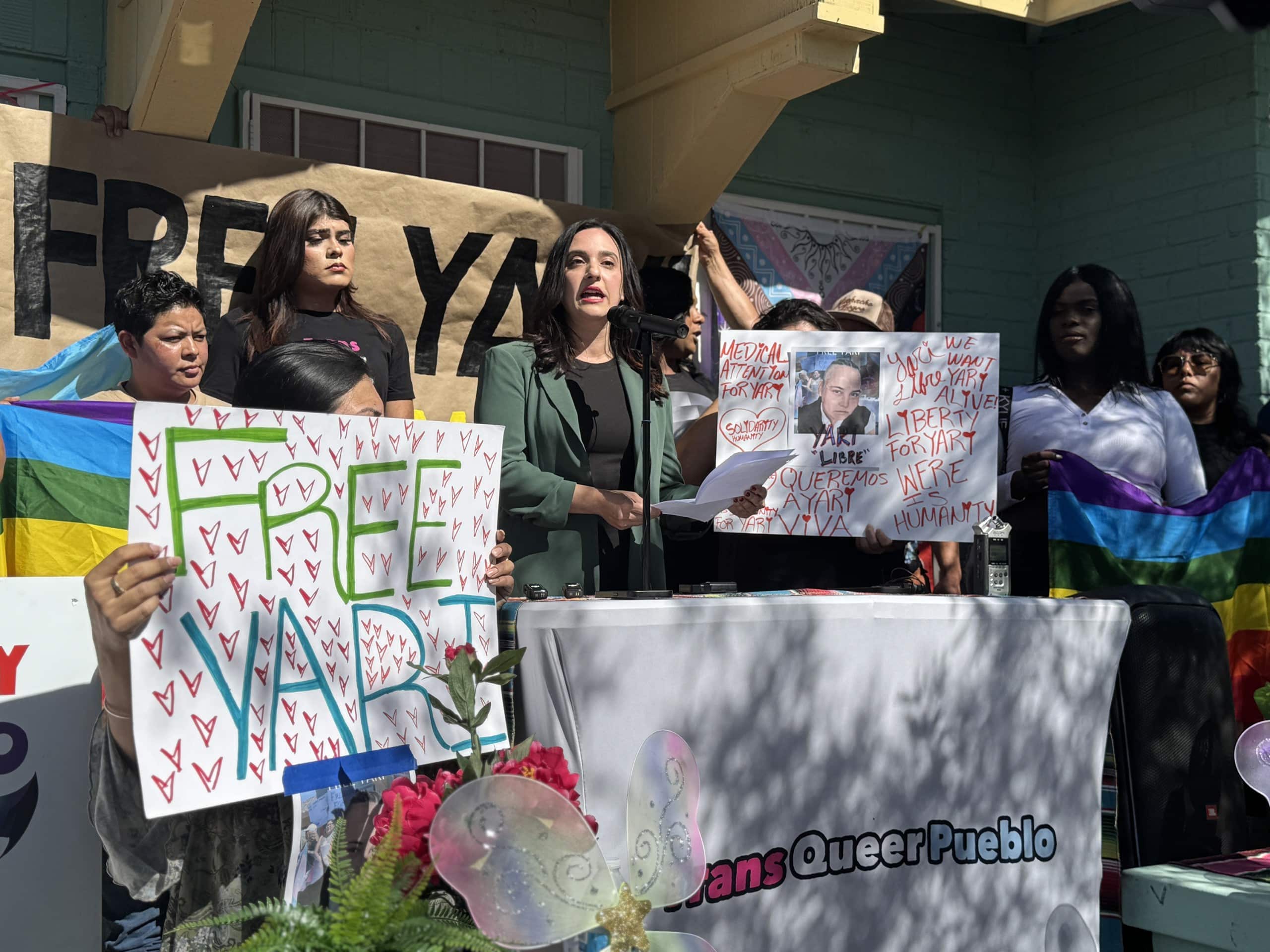
On June 28, the anniversary of the Stonewall riots in New York, organizers from Trans Queer Pueblo, an LGBTQ+ and migrant-led abolitionist group and the primary organization fighting for Yari’s release, held a demonstration outside of Eloy Detention Center.
In the hot Arizona sun, attendees chanted, spoke and performed outside while calling for Yari’s release and bringing attention to the mistreatment of other detainees. At the rally, Renata, a transgender woman who spent months detained inside Florence Correctional Center, spoke about her experience witnessing the death of Emmanuel Damas, a 56-year-old Haitian asylum seeker.
Damas died March 2 after what began as severe dental pain developed into infections in his neck, throat and chest. The Maricopa County medical examiner later determined his death was related to severe dental disease.
“I was a witness to how the Florence Correctional Center killed him,” Renata said. “I refuse to stay silent because it could have been me.”
Medical neglect has also emerged as a recurring concern among LGBTQ+ people detained in Arizona.
Karla Sáenz, a transgender Venezuelan asylum seeker, Trans Queer Pueblo organizer and one of the first to spread word of Yari’s case, spent 44 days at Eloy Detention Center this spring after being detained during an immigration appointment in Phoenix. Sáenz said she was housed in a men’s unit, denied hormone therapy and given the wrong medication for weeks and was subjected to transphobic treatment while in custody.
A federal judge ordered Sáenz’s release in April after government attorneys did not contest claims surrounding wrongful detainment in her habeas petition — a legal challenge to whether the government can lawfully continue holding someone in custody. Sáenz immediately returned to advocating for those still inside, including Yari.
But as TQP and other groups’ actions became increasingly visible outside Eloy’s walls, Flores Bahena said Yari became a target inside them.

They said that as the campaign gained traction, detention center staff began retaliating against Yari. Flores Bahena said that Yari was repeatedly moved between cells and subjected to supposedly random searches that appeared to target her.
“They were moving her from cell to cell, so she can’t establish no community, no family.”
Almaraz recalled Yari saying that guards inside the detention center told her, “Why don’t you tell [Sonia] to stop?”
CALÓ News asked ICE about these claims, but the emailed statement did not acknowledge them.
With the visibility, lawmakers have now publicly called for Yari’s release, medical professionals have signed letters questioning whether Eloy can adequately care for someone with her conditions and advocates have pushed for outside specialists to evaluate her.
After nearly seven months in detention, Rep. Yassamin Ansari, D-Ariz, said Yari finally saw an oncologist in September 2025, following public pressure. But advocates say getting her to specialists remained inconsistent. Almaraz said Yari was scheduled for another oncology appointment that December but was not taken to it, followed by two more missed appointments in April and May of 2026.
ICE disputes these, saying, “No appointments were canceled in December 2025 or in April or May 2026, and no oncology visit was ordered for December 2025. Rodriguez Yari attended consultation appointments in March 2026 and April 2026.
Flores Bahena disputed the characterization of the appointments, saying the records do not indicate whether the detention center failed to arrange transportation.
“This is the part that’s hard, right? Because we have actually accomplished so much,” they said. “And yet, Yari is still in Eloy.”
The rallies have grown. Yari’s name has appeared in national news. Elected officials and doctors have joined the campaign.
“And yet this government still has Yari locked up,” Flores Bahena said. “Yari can still die in there.”
An outside visit
Because of the public campaign to gain Yari’s freedom, by the time Elizabeth Lee walked into the Eloy Detention Center earlier this year, she was acutely aware of what was happening to her.
Lee, a registered nurse and patient advocate now running for Congress in Arizona, had seen Yari’s story circulating online but wanted to see the conditions inside Eloy for herself.
“I feel like if I don’t see it for myself, I won’t have enough credibility to really make a stink about this,” Lee said in a sit-down interview.
In late March, she made the trek alongside Almaraz.
Getting inside meant passing through layers of security and following strict visitation rules, including no open-toed shoes or sleeveless shirts.
After showing up in exactly that, Almaraz entered while Lee rushed to the nearest Dollar General for a jacket and closed-toe shoes. As a result, her visit was cut in half.
Before and after visitation, Lee said all detainees are strip-searched. She watched families sit across tables from the people they had come to see. Visitors are only allowed to embrace twice each visit. She recalled a toddler being repeatedly reprimanded for trying to cross to the other side of the table toward their detained relative.
“She was visibly in pain,” Lee said of Yari.
She noticed her shifting weight from hip to hip, seemingly trying to relieve the pressure. Dark circles shadowed her eyes. Her skin looked sallow. Even using the walker was tough.
“To then get inside and see her and see how fragile and frail she was — it was otherworldly,” Lee said. “I couldn’t believe that any established institution in the United States would be allowed to have somebody in that condition, and just deny them care.”
As a health care worker herself, Lee said time is everything during cancer care, and was concerned that medical professionals evaluating Yari are not “screaming from the rooftops” about her condition.
“When there’s a need, and you’re aware of it, if you fail to do something about it, then that’s medical neglect,” Lee said.
During the visit, Yari told Lee that detainees could access drinkable water only by melting ice or buying bottled water from the commissary for about $3.
In a diary entry from after the visit that Lee shared, she wrote that Yari looked like “she had seen something she could never unsee and felt something she could never unfeel.”
Before the visitation ended, Yari made sure to tell Lee one thing she wants people to know: She is not a criminal.
‘There is always light at the end of the tunnel’
At demonstrations, organizers chant toward the buildings holding Yari and hundreds of others. Sometimes, people inside pound against the windows and whistle back.
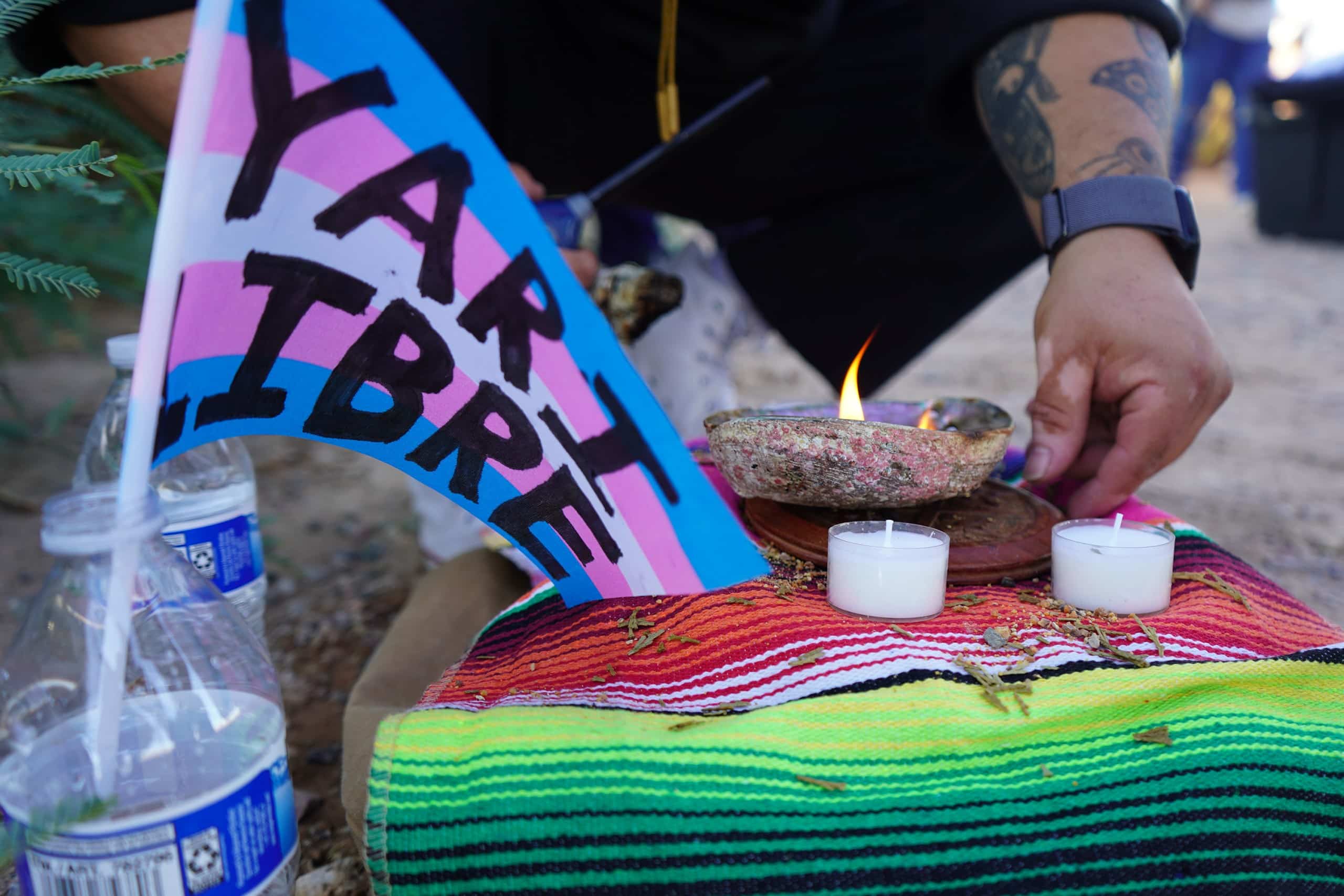
Almaraz didn’t know at first how clearly their voices carried through the walls.
Then, during one of their visits, Yari told her.
“Baby,” Almaraz recalled her saying, “I was able to hear you guys.”
She told Almaraz that people inside got excited when they heard the demonstrations outside. She said knowing the demonstrations reach Yari brings her some comfort.
Almost 15 years ago, Almaraz went to that friend’s gathering and unknowingly walked away with a life partner who she’d go on to spend nearly every day with.
Now, each week, she drives to Eloy to spend one hour with her. When that hour ends, they are allowed one final hug and kiss. Then Almaraz leaves without her.
Even as Yari nears 19 months in detention, Almaraz keeps coming back.
“No matter how isolated they can keep you,” she said, “There’s always gonna be somebody fighting for you.”
“There is always light at the end of the tunnel.”
Independent journalist Susan Barnett contributed to this reporting.
Author

Related Articles
She spent months in detention. Now she supports other LGBTQ+ migrants fighting detention and deportation
The idea for the guide started when I realized just how confusing and frustrating the immigration detention system is for our neighbors impacted by family separation and potential deportation.
“Ya te atraparon”: One Tucson family’s deportation story from Arizona to Sonora
A family is forced to make a decision — both from inside a detention center in Florence and from the safety of a longtime home in Tucson — that will lead them across a border.

Navigating the immigration detention system is confusing. We built this guide to help Arizonans
The idea for the guide started when I realized just how confusing and frustrating the immigration detention system is for our neighbors impacted by family separation and potential deportation.
