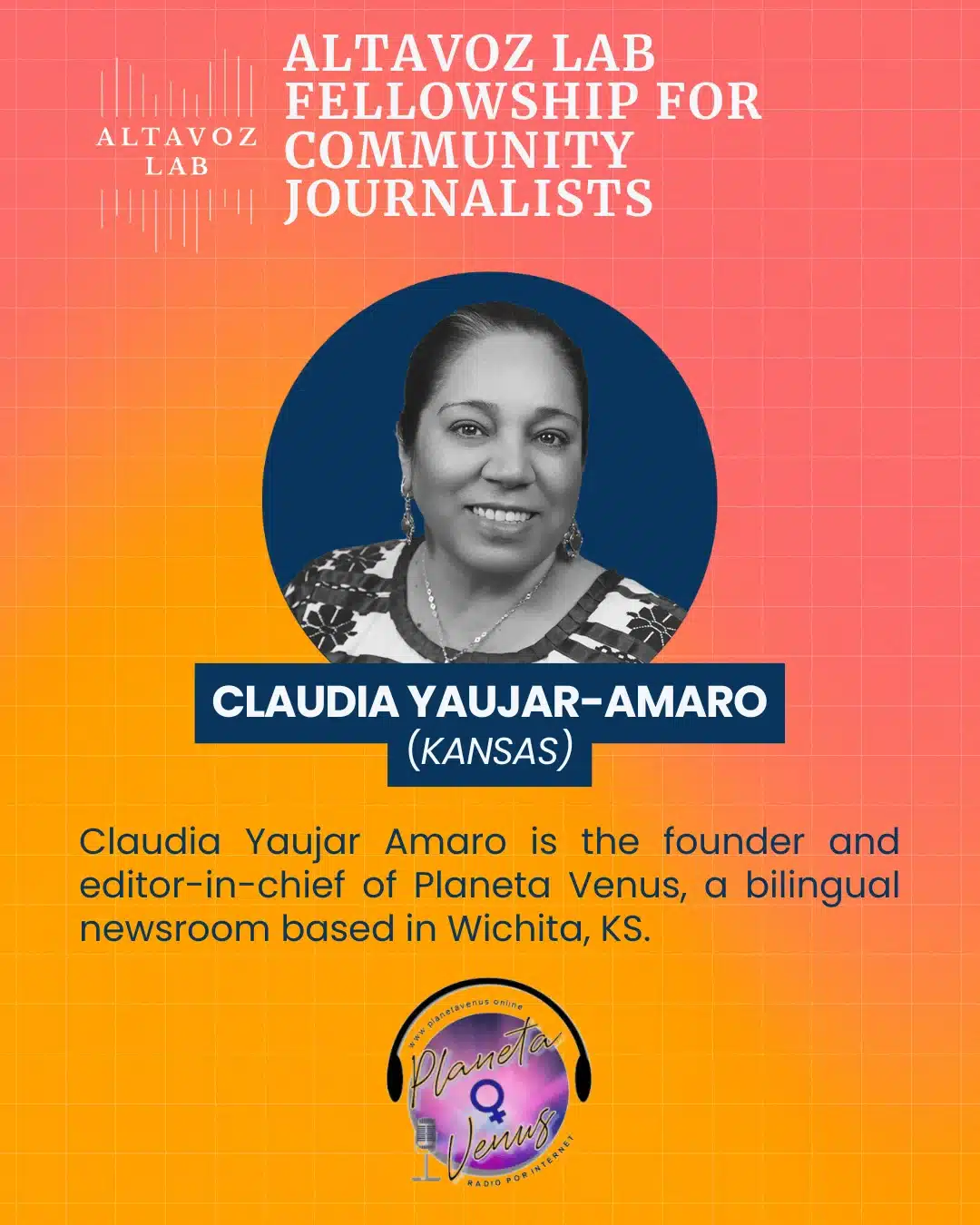
🎉 Our Fellow’s Impact: Claudia Yaujar-Amaro
Bridging the Gap: Making Social Services Accessible in Kansas
Through the Altavoz Lab Fellowship, Claudia Yaujar-Amaro’s reporting is shining a light on a critical issue: many Latino families in Kansas don’t know about, or don’t trust, the social services available to them. As part of her research for this project, Yaujar-Amaro conducted a survey that reveals that between 57% and 71% of local Latino residents had never heard of legal, business or housing resources available to them in the state. Her first story in the series, “Living Waters is a trusted option that truly helps connect Latino families to the support they need,” underscores that the problem in access isn’t that these services don’t exist, it’s that information often isn’t available in Spanish, culturally relevant, or delivered through trusted community messengers.
The series demonstrates how Living Waters, a community food pantry serving about 175 people per week in Wichita, has bridged this gap by offering humane, respectful, and bilingual support rather than bureaucratic barriers. Claudia’s reporting shows the impact of asking not just “what services exist?” but “why don’t people know about them, and what would it take to change that?”
Q&A With Claudia:
What motivated you to apply for the Altavoz Lab Community Fellowship, and how does that motivation connect to the topic you are investigating?
I was motivated by the fact that our outlet, Planeta Venus, is a trusted source for connecting our community with the resources available in the state. However, there is immense need, especially in rural areas, and so little funding is allocated to integrating Latino voices into these processes.
What did you discover about the barriers Latino families face when accessing social services in Kansas, and what surprised you most in your reporting?
Although I had some awareness of certain issues, first and foremost I was surprised by the community’s response and willingness to participate in the survey. I was also struck by the differences in needs between rural areas and urban areas.
How has the fellowship, its resources, mentorship, and community—influenced your reporting process and the way you approached this series?
Very much so. To begin with, this fellowship has allowed me to focus on “the elephant in the room.” We all know that many resources do not reach the Latino community, but a deeper investigation was needed, one that truly listened to the community and its needs. In addition, it gave me the security and confidence to do the work; I felt supported throughout the process.
Your work shows that trust and cultural relevance are key to accessing support. What lessons have you learned from this approach, and how does Living Waters put it into practice?
Many organizations talk a lot about inclusion, but do not take action, often because they believe they need to have a full structure in place first. At Living Waters, they started simply with bilingual signage, smiles, and warm greetings, and that alone drew the community in to access their services. Even when they are sometimes limited in the number of Spanish-speaking volunteers, that has not stopped them.
In your experience, what role do community journalists play as intermediaries between government, available resources, and the community, and why is this role important?
Information is extremely important, and as journalists, we can help close those gaps by interviewing experts and finding the information our communities need. In my case, I serve a community that speaks a different language and often comes from a different cultural background, but there will always be people who need help understanding processes or knowing how and where to begin. For example, new programs are often launched without much information, or there are people who may have never needed to ask for help in their lives and suddenly find themselves having to do so, or young people who have just graduated from university and are entering adulthood without fully understanding these systems. There will always be a need for information, connection, and resources.
Looking ahead, what impact do you hope this investigation will have, and how has the fellowship strengthened your path as a journalist committed to your community?
I hope the Latino community can find easier ways to access the information they need, so they can participate more in processes and have their voices better represented. I also hope that different organizations understand the needs within the Latino community and take them into account when designing their communication plans for various programs or resources, rather than considering them only at the end, after marketing or outreach resources have already been exhausted. And that they understand the cultural and language differences that exist.
On a personal level, this project has given me the confidence to try a different kind of journalism, one that brings journalists closer to the communities we serve, beyond traditional approaches.
A version of this was published on our monthly newsletter, if you would like to receive our news subscribe to En Voz Alta on the sidebar.
Author